

Protecting America’s Seniors from Online Scams – 2025
New to scam terminology? Visit our Scam & Cybersecurity Glossary for plain-English definitions of common fraud and cybersecurity terms.
In 2025, online scams cost American seniors $7.748 billion across 201,266 reported victims age 60+ — a 59% year-over-year jump from $4.885 billion in 2024. Average loss per victim: $38,500. The largest category is investment fraud ($3.5 billion), followed by tech support ($1 billion+), business email compromise ($568 million), and romance scams ($584 million). Idaho, Nebraska, and Maine lead the fastest-growing states. To report fraud, call the U.S. Department of Justice Elder Fraud Hotline at 1-833-FRAUD-11 or file at ic3.gov (FBI) and reportfraud.ftc.gov (FTC).
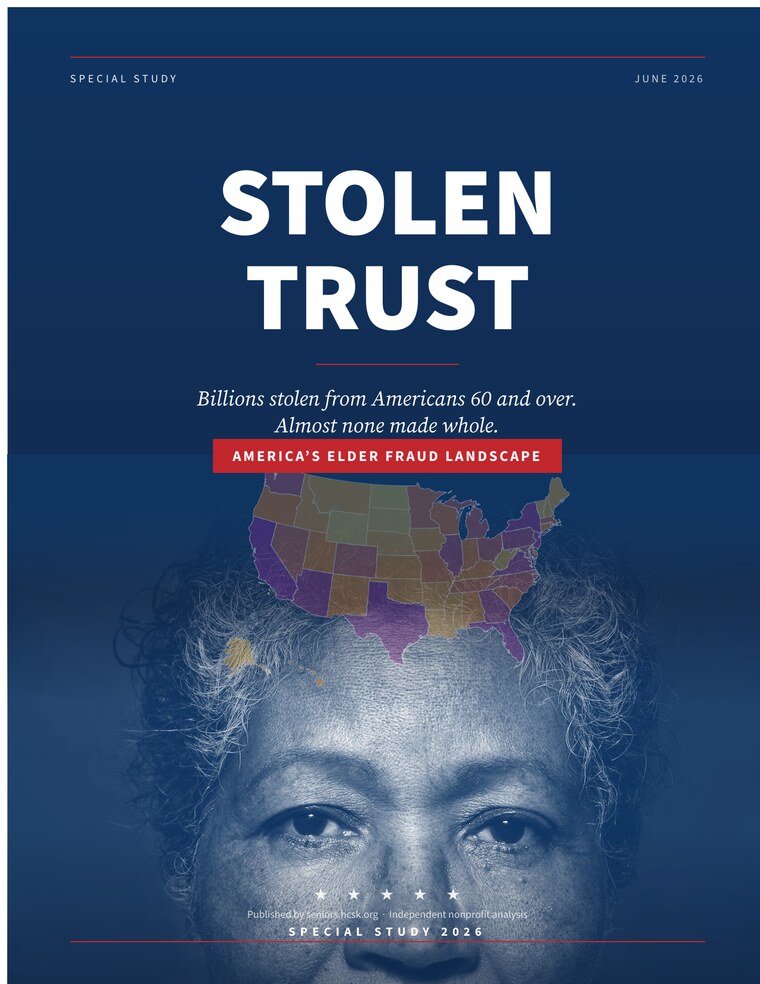
Online scammers deliberately target older adults, exploiting their trust, isolation, and sometimes limited experience with technology. The consequences extend far beyond financial losses, causing severe emotional distress, family turmoil, and lasting damage to health and independence. It is crucial, therefore, to understand the types of scams most commonly faced by American seniors and how best to prevent them. For the complete national picture, read Stolen Trust, our 2026 special study on elder fraud across all 50 states.
Last updated: May 16, 2026 · Primary sources: FBI IC3 2025 Annual Report, FTC Protecting Older Consumers (Dec 2025), DOJ Elder Justice, plus our news corpus of 1,910 parseable elder-fraud articles. · Data & methodology: see notes below.
On This Page
- 2025 at a Glance
- Five Years of Elder Fraud
- Common Elder Scams
- Recognizing the Warning Signs
- What to Do if Targeted
- Reporting a Scam
- The 15-Minute Family Conversation
- Staying Safe, Staying Informed
- Find Your State
- Share Your Story
2025 at a Glance: A Crisis Accelerating
The 2025 FBI IC3 data reveals a sharp acceleration in elder fraud. Compared to 2024, total reported losses surged 59% — from $4.885 billion to $7.748 billion — while the number of senior victims rose 37%, from 147,000 to over 201,000. The average loss per victim now stands at approximately $38,500, meaning each successful scam costs a senior roughly the equivalent of a year’s worth of Social Security payments.
Beyond these well-known schemes, two additional crime types are devastating seniors across every state: Lottery, Sweepstakes, and Inheritance scams ($136 million in losses), where victims are told they’ve won a prize but must pay fees or taxes to collect, and Extortion ($54 million), including a sharp rise in AI-generated sextortion targeting older adults. Both categories saw dramatic year-over-year increases in most states.
Five Years of Elder Fraud: The National Crisis in Numbers (2021—2025)
The FBI’s Internet Crime Complaint Center has tracked elder fraud nationally since 2019, but the five-year window from 2021 through 2025 tells a particularly alarming story: losses have grown about 360% while victim counts more than doubled. In total, American seniors have reported losing more than $20.8 billion to cybercriminals over these five years — a figure that likely represents only a fraction of actual losses, since FTC research estimates fewer than 1 in 20 victims ever file a report with a government agency. (The year-by-year table below sums the 52 FBI IC3 state and territory files, which run slightly below these national totals; see the methodology note at the end of this page.)
| Year | Victims (60+) | Total Losses | Avg. Loss/Victim | YoY Change |
| 2021 | 88,949 | $1,594,013,929 | $17,920 | — |
| 2022 | 85,001 | $3,005,614,067 | $35,359 | +89% |
| 2023 | 91,085 | $3,321,761,680 | $36,468 | +11% |
| 2024 | 143,522 | $4,749,294,840 | $33,091 | +43% |
| 2025 | 196,200 | $7,431,715,400 | $37,878 | +56% |
| 5-Year Total | 604,757 | $20,102,399,916 | $33,240 | +360% (2021—2025) |
Key takeaways from the five-year trend:
- Losses nearly quintupled — from $1.685 billion in 2021 to $7.748 billion in 2025, about a +360% increase (FBI IC3 national totals).
- Victim counts more than doubled — from 92,371 in 2021 to 201,266 in 2025 (+118%), meaning criminals are casting a far wider net.
- Average loss per victim surged — from about $18,200 in 2021 to $38,500 in 2025, showing scammers are extracting more from each target.
- The steepest jump was 2021—2022 — losses grew about +84% in a single year as crypto investment scams exploded.
- 2024—2025 saw the largest dollar increase — an additional $2.9 billion in losses, driven by AI-enhanced fraud techniques.
Every state page on this site now includes a 5-year trend table showing how elder fraud has grown locally. For a deeper analysis, see our Fastest Growing States page, which ranks all 52 states by growth rate and identifies where elder fraud is accelerating most rapidly. For the full data-driven analysis, read our Five Years of Elder Fraud in America report, or explore how crime types have shifted over five years. Use the state links below to see your state’s specific trajectory, or read on for the most common scam types targeting seniors today.
Data & methodology. National headline figures ($7.748 billion / 201,266 victims for 2025) come from the FBI Internet Crime Complaint Center (IC3) 2025 Annual Report. Some state-level tables on this page sum to slightly different national totals (~$7.43 billion) because state-summed figures from individual IC3 state reports exclude federal field-office complaints not assigned to a state. The FBI’s published headline figure is canonical. The FTC’s “Protecting Older Consumers” report (Dec 2025) estimates the true total elder-fraud loss is between $10.1 billion and $81.5 billion annually when accounting for unreported cases — only an estimated 4–5% of fraud reaches federal authorities. State population denominators use U.S. Census Bureau July 1, 2024 estimates. Crime-type breakdowns use IC3’s reported categories. The five-year national-trend table compiles all 52 IC3 state/territory reports for 2021–2025. Year-over-year and 5-year growth percentages are computed from raw IC3 totals. Last refreshed against sources: May 16, 2026. Corrections or methodology questions: [email protected].
Documented Cases: What the National Numbers Look Like Up Close
Behind every dollar in the FBI’s aggregate totals is a real person and, often, a federal indictment. Three recent cases illustrate the scale and reach of the elder-fraud economy.
Federal “Save Our Seniors” Initiative — $11 million, 139 victims (Sept. 2025)
U.S. Attorneys announced a multi-district initiative dismantling tech-support, grandparent, and government-impersonation rings targeting older Americans. $11 million in actual and attempted losses across 139 identified victims, ages 60+. Two money mules operating in western New York were charged with wire fraud and money laundering tied to $276,000 in losses from senior victims. Among them: an 81-year-old man who lost $38,000 in a fake Microsoft refund scam, and a 68-year-old Buffalo woman who handed $20,000 in cash to a courier she believed was a federal agent. Source: U.S. Attorney’s Office, Western District of New York, Sept. 19, 2025.
Major U.S. Indictment Against an Industrial-Scale Pig-Butchering Network — $30 Million Per Day at Peak (Oct. 2025)
U.S. prosecutors in New York unsealed a sweeping indictment alleging one of Asia’s largest pig-butchering operations — powered by forced labor in scam compounds and earning, at peak, an alleged $30 million per day. The case is the U.S. government’s most significant action to date against the transnational scam economy that drives the largest single elder-fraud loss category (investment fraud, $3.5 billion in 2025 alone). Funds flowed into Picasso artwork, private jets, and London real estate. Source: CNN, Oct. 25, 2025.
Carlsbad, CA — $1.49 Million Gold-Bar “Safekeeping” Scam (Dec. 2025)
A Carlsbad woman in her 80s lost $1.49 million after scammers transitioned across three impersonation roles — tech support, bank officials, then federal agents. The pretext: her savings must be converted to gold bars and stored in a fictitious U.S. Treasury “locker.” Over two months she made three wire transfers totaling $1,335,000 to a San Marcos precious-metals business, then handed the gold to a courier. The FBI ran a sting on the final $100,000 pickup. Two defendants pleaded guilty in federal court. Source: CBS 8 San Diego, Dec. 4, 2025.
Common Elder Scams in the United States
Among the various frauds that seniors face, certain types occur with troubling frequency. Investment scams are a leading threat, where criminals offer fake or misleading opportunities promising high returns with little or no risk. Often, these scams begin subtly on social media or dating platforms before escalating into cryptocurrency schemes or complex pyramid structures. In 2025, investment fraud cost seniors $3.5 billion — the largest loss category.
Tech support scams are another major threat. Criminals pose as representatives from trusted companies like Microsoft, Apple, or internet service providers, falsely claiming a senior’s computer or personal data is compromised. They pressure their victims to provide remote access to their devices, eventually stealing financial information or charging exorbitant fees for fake services. In 2025, tech support fraud cost seniors over $1 billion.
Romance scams tragically exploit emotional vulnerability, loneliness, and isolation. Scammers establish seemingly genuine relationships online, quickly expressing strong feelings of love or friendship. Once trust is established, these scammers fabricate emergencies or urgent needs, convincing victims to send money, often repeatedly and in large amounts. Romance fraud cost seniors $584 million in 2025.
Government impersonation scams are particularly malicious, as fraudsters pretend to be officials from respected agencies like the IRS, Medicare, Social Security Administration, or even law enforcement. They threaten seniors with arrests, suspended benefits, or fines, creating panic and pressuring immediate payment through untraceable methods, such as wire transfers or gift cards. Government impersonation cost seniors $413 million in 2025 (FBI IC3, age 60+).
Lottery, sweepstakes, and inheritance scams lure seniors with fake notifications of prizes or inheritances they never entered. Victims are told they must pay fees, taxes, or processing charges to claim their “winnings.” These scams are persistent and often target the same victims repeatedly. Lottery and sweepstakes fraud cost seniors $136 million in 2025 (FBI IC3, age 60+).
Extortion scams use fear and threats to extract money from seniors. Criminals may claim to have compromising information, threaten legal action, or use intimidation tactics including fake arrest warrants. Extortion cost seniors $54 million in 2025 (FBI IC3, age 60+).
AI-powered scams represent the fastest-growing threat to seniors. Artificial intelligence enables criminals to clone voices, create deepfake videos, generate flawless phishing messages, power chatbots that maintain fake relationships for months, and fabricate official documents and trading platforms. The FBI’s 2025 IC3 report included an AI section for the first time, documenting $893 million in AI-enabled losses. For seniors aged 60+, AI-related fraud accounted for $352 million in reported losses — a figure the FBI acknowledges is a significant undercount, as many victims do not realize AI was involved.
Heat Map – Elder Fraud Victims Per State: 2024 vs 2025
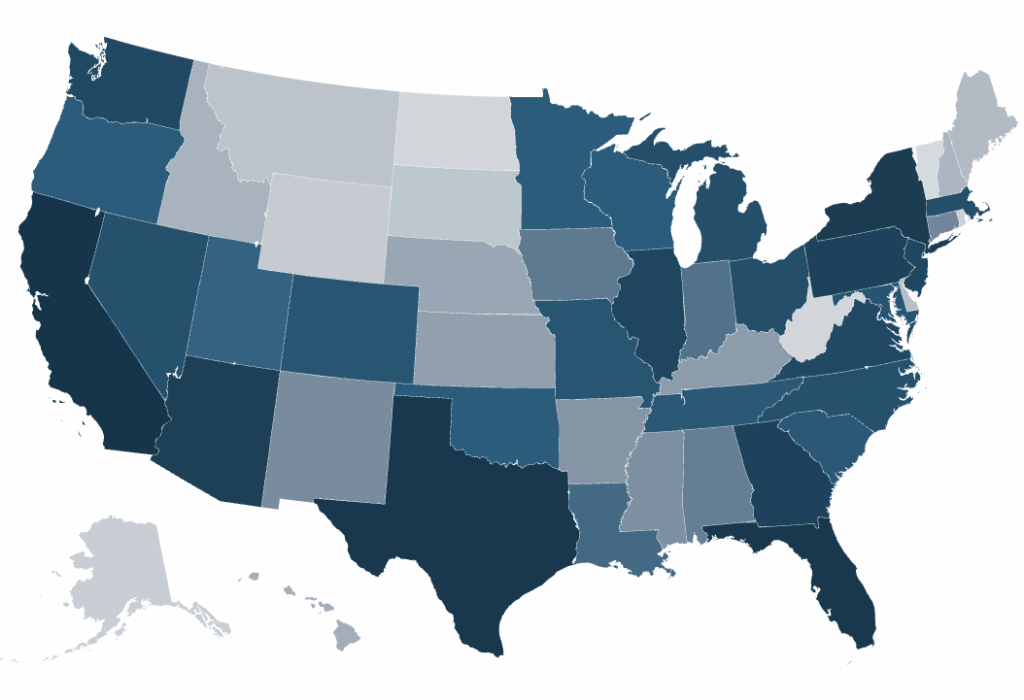
Elder Fraud Victims per State (2024)
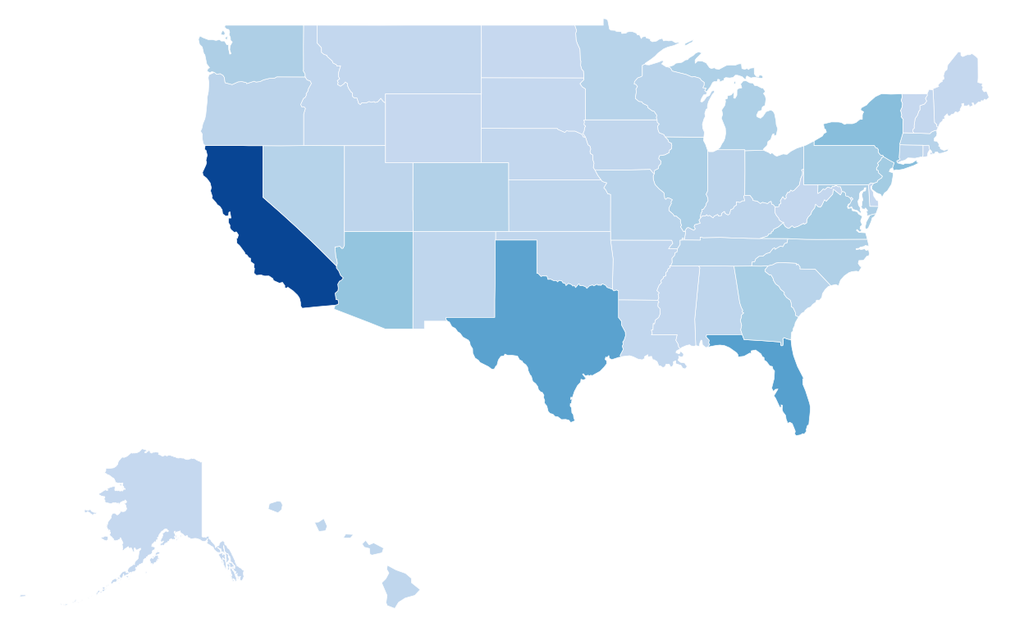
Elder Fraud Victims per State (2025)
| Rank | State / Territory | 2024 Loss | 2025 Loss | Change |
| 1 | California | $832,710,048 | $1,403,975,911 | +69% |
| 2 | Florida | $388,436,198 | $709,823,172 | +83% |
| 3 | Texas | $489,790,386 | $678,564,081 | +39% |
| 4 | New York | $257,658,301 | $408,741,632 | +59% |
| 5 | Arizona | $190,686,835 | $343,984,935 | +80% |
| 6 | New Jersey | $133,397,512 | $249,808,786 | +87% |
| 7 | Virginia | $106,575,141 | $220,941,233 | +107% |
| 8 | Georgia | $174,744,201 | $218,218,618 | +25% |
| 9 | Pennsylvania | $151,096,514 | $215,887,466 | +43% |
| 10 | Illinois | $133,794,241 | $189,491,209 | +42% |
| 11 | Washington | $107,052,160 | $179,706,909 | +68% |
| 12 | Maryland | $80,128,654 | $176,380,737 | +120% |
| 13 | Michigan | $92,378,793 | $169,931,948 | +84% |
| 14 | North Carolina | $87,449,567 | $164,214,173 | +88% |
| 15 | Ohio | $95,441,773 | $163,748,647 | +72% |
| 16 | Colorado | $74,760,501 | $144,529,956 | +93% |
| 17 | Nevada | $81,400,930 | $115,267,384 | +42% |
| 18 | Massachusetts | $99,804,762 | $113,880,471 | +14% |
| 19 | Minnesota | $52,262,721 | $111,387,313 | +113% |
| 20 | Tennessee | $61,882,884 | $108,305,976 | +75% |
| 21 | South Carolina | $58,581,997 | $97,344,480 | +66% |
| 22 | Wisconsin | $50,525,457 | $92,041,492 | +82% |
| 23 | Missouri | $63,530,750 | $91,563,419 | +44% |
| 24 | Indiana | $37,209,947 | $81,517,309 | +119% |
| 25 | Oregon | $48,116,839 | $77,481,475 | +61% |
| 26 | Connecticut | $30,918,559 | $73,178,714 | +137% |
| 27 | Utah | $44,155,961 | $65,946,070 | +49% |
| 28 | Kentucky | $26,139,251 | $64,441,069 | +147% |
| 29 | Alabama | $33,200,314 | $58,838,411 | +77% |
| 30 | New Mexico | $30,034,919 | $55,820,259 | +86% |
| 31 | Kansas | $23,511,153 | $55,730,977 | +137% |
| 32 | Hawaii | $18,851,052 | $55,385,929 | +194% |
| 33 | Oklahoma | $50,203,394 | $53,333,350 | +6% |
| 34 | Iowa | $34,991,114 | $44,136,901 | +26% |
| 35 | Idaho | $18,663,392 | $37,394,229 | +100% |
| 36 | Arkansas | $27,253,501 | $36,958,369 | +36% |
| 37 | Louisiana | $37,512,993 | $35,856,847 | -4% |
| 38 | Mississippi | $28,870,444 | $33,087,218 | +15% |
| 39 | Montana | $12,056,193 | $31,773,898 | +164% |
| 40 | Nebraska | $21,414,248 | $28,430,567 | +33% |
| 41 | New Hampshire | $15,840,854 | $25,068,671 | +58% |
| 42 | Maine | $12,980,616 | $23,317,413 | +80% |
| 43 | Rhode Island | $6,309,411 | $21,561,918 | +242% |
| 44 | West Virginia | $5,790,489 | $18,953,441 | +227% |
| 45 | Alaska | $8,173,395 | $16,252,410 | +99% |
| 46 | Delaware | $12,293,619 | $16,189,240 | +32% |
| 47 | South Dakota | $8,975,829 | $14,708,875 | +64% |
| 48 | District of Columbia | $251,454,544 | $10,077,243 | -96% |
| 49 | Vermont | $4,177,269 | $8,548,782 | +105% |
| 50 | Puerto Rico | $20,183,422 | $8,167,452 | -60% |
| 51 | Wyoming | $8,648,675 | $5,923,260 | -32% |
| 52 | North Dakota | $5,781,845 | $5,895,155 | +2% |
What the numbers reveal: Just five states — California, Florida, Texas, New York, and Arizona — account for 48% of all elder fraud losses nationwide. California alone represents nearly one in five dollars lost. Losses increased in 48 of 52 states and territories, with Rhode Island (+242%), West Virginia (+227%), and Hawaii (+194%) experiencing the most dramatic surges. Only four jurisdictions saw decreases: the District of Columbia (-96%, falling from an anomalous 2024 spike), Puerto Rico (-60%), Wyoming (-32%), and Louisiana (-4%).
Heat Map – Elder Fraud Victims Rate Per State: 2024 vs 2025
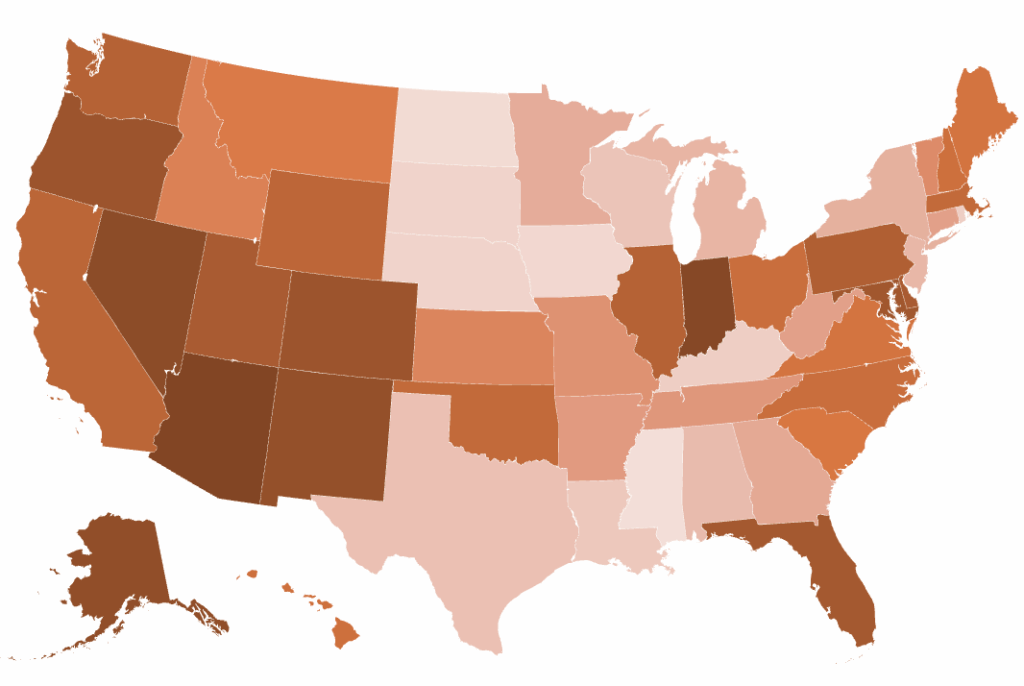
Elder Fraud Victims Rate – Per 100,000 Population (2024)
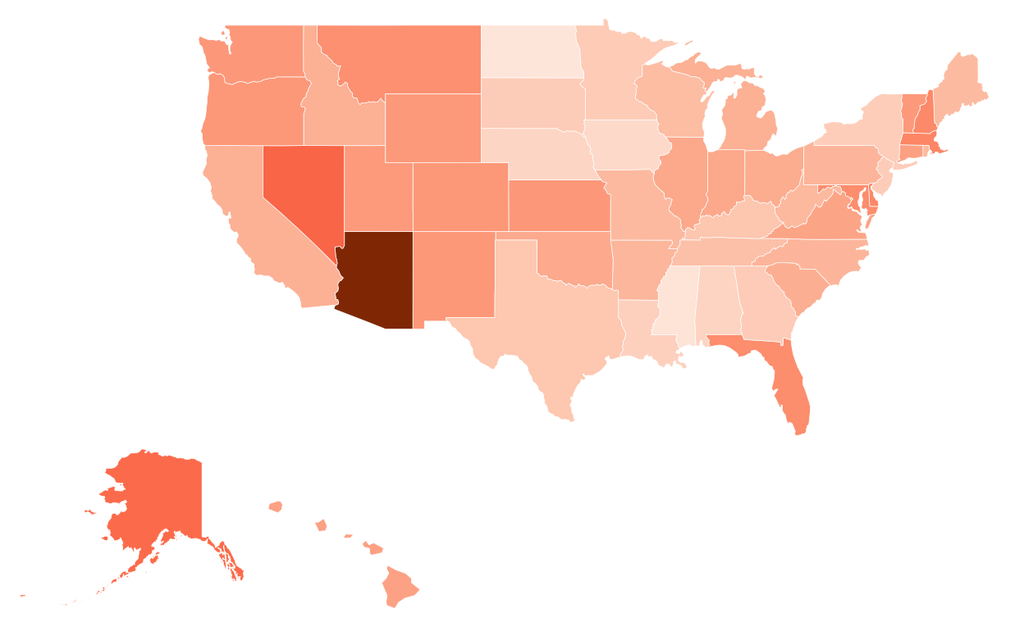
Elder Fraud Victims Rate – Per 100,000 Population (2025)
Based on Official U.S. Census Bureau July 1, 2024 Population Estimates
| Rank | State | Victim Count | 2024 Population | 2025 Rate | 2024 Rate | Change |
| 1 | Arizona | 9,834 | 7,582,384 | 129.70 | 88.14 | +47% |
| 2 | Nevada | 3,008 | 3,267,467 | 92.06 | 70.36 | +31% |
| 3 | Alaska | 666 | 740,133 | 89.98 | 62.96 | +43% |
| 4 | Massachusetts | 5,463 | 7,136,171 | 76.55 | 45.17 | +69% |
| 5 | Delaware | 796 | 1,051,917 | 75.67 | 48.86 | +55% |
| 6 | New Hampshire | 1,063 | 1,409,032 | 75.44 | 44.92 | +68% |
| 7 | Florida | 17,147 | 23,372,215 | 73.36 | 50.93 | +44% |
| 8 | Maryland | 4,573 | 6,263,220 | 73.01 | 51.59 | +42% |
| 9 | Montana | 814 | 1,137,233 | 71.58 | 38.51 | +86% |
| 10 | Colorado | 4,061 | 5,957,493 | 68.17 | 52.50 | +30% |
| 11 | Oregon | 2,910 | 4,272,371 | 68.11 | 53.53 | +27% |
| 12 | New Mexico | 1,449 | 2,130,256 | 68.02 | 53.99 | +26% |
| 13 | Kansas | 2,013 | 2,970,606 | 67.76 | 38.01 | +78% |
| 14 | Washington | 5,392 | 7,958,180 | 67.75 | 46.40 | +46% |
| 15 | Wyoming | 397 | 587,618 | 67.56 | 45.44 | +49% |
| 16 | Vermont | 436 | 648,493 | 67.23 | 37.47 | +79% |
| 17 | Utah | 2,341 | 3,503,613 | 66.82 | 50.26 | +33% |
| 18 | Connecticut | 2,360 | 3,675,069 | 64.22 | 32.90 | +95% |
| 19 | Hawaii | 917 | 1,446,146 | 63.41 | 44.74 | +42% |
| 20 | Virginia | 5,509 | 8,811,195 | 62.52 | 43.60 | +43% |
| 21 | Indiana | 4,199 | 6,924,275 | 60.64 | 76.91 | -21% |
| 22 | Illinois | 7,701 | 12,710,158 | 60.59 | 47.71 | +27% |
| 23 | Oklahoma | 2,449 | 4,095,393 | 59.80 | 45.36 | +32% |
| 24 | Ohio | 6,948 | 11,883,304 | 58.47 | 45.34 | +29% |
| 25 | South Carolina | 3,136 | 5,478,831 | 57.24 | 41.86 | +37% |
| 26 | Idaho | 1,136 | 2,001,619 | 56.75 | 38.72 | +47% |
| 27 | Michigan | 5,731 | 10,140,459 | 56.52 | 31.04 | +82% |
| 28 | California | 22,157 | 39,431,263 | 56.19 | 45.87 | +22% |
| 29 | District of Columbia | 382 | 702,250 | 54.40 | 38.01 | +43% |
| 30 | Pennsylvania | 7,088 | 13,078,751 | 54.19 | 48.57 | +12% |
| 31 | North Carolina | 5,942 | 11,046,024 | 53.79 | 45.54 | +18% |
| 32 | Arkansas | 1,658 | 3,088,354 | 53.69 | 34.42 | +56% |
| 33 | West Virginia | 931 | 1,769,979 | 52.60 | 33.56 | +57% |
| 34 | Rhode Island | 581 | 1,112,308 | 52.23 | 29.13 | +79% |
| 35 | Missouri | 3,247 | 6,245,466 | 51.99 | 35.20 | +48% |
| 36 | Maine | 721 | 1,405,012 | 51.32 | 43.27 | +19% |
| 37 | Wisconsin | 3,014 | 5,960,975 | 50.56 | 29.94 | +69% |
| 38 | Tennessee | 3,525 | 7,227,750 | 48.77 | 35.18 | +39% |
| 39 | Kentucky | 2,127 | 4,588,372 | 46.36 | 29.11 | +59% |
| 40 | Texas | 14,410 | 31,290,831 | 46.05 | 30.28 | +52% |
| 41 | Minnesota | 2,550 | 5,793,151 | 44.02 | 31.69 | +39% |
| 42 | Georgia | 4,865 | 11,180,878 | 43.51 | 32.40 | +34% |
| 43 | New Jersey | 4,111 | 9,500,851 | 43.27 | 30.71 | +41% |
| 44 | South Dakota | 398 | 924,669 | 43.04 | 28.01 | +54% |
| 45 | New York | 8,537 | 19,867,248 | 42.97 | 31.33 | +37% |
| 46 | Louisiana | 1,906 | 4,597,740 | 41.46 | 29.84 | +39% |
| 47 | Alabama | 2,057 | 5,157,699 | 39.88 | 30.38 | +31% |
| 48 | Nebraska | 781 | 2,005,465 | 38.94 | 27.48 | +42% |
| 49 | Iowa | 1,202 | 3,241,488 | 37.08 | 24.77 | +50% |
| 50 | Mississippi | 959 | 2,943,045 | 32.59 | 20.52 | +59% |
| 51 | North Dakota | 251 | 796,568 | 31.51 | 21.84 | +44% |
Why per-capita rates matter: Raw dollar losses favor large states, but the per-capita victim rate tells a different story. Arizona leads the nation at 129.70 victims per 100,000 residents — meaning roughly one senior victim for every 770 Arizona residents. Smaller states like Alaska (#3), Delaware (#5), and New Hampshire (#6) rank among the hardest-hit when population is factored in, despite appearing lower in the total-loss table. Critically, 50 out of 51 states saw their per-capita rate increase year-over-year; only Indiana saw a decrease. This is not a regional problem — it is a nationwide crisis that is getting worse everywhere.
Recognizing the Warning Signs
Though scams vary widely, certain consistent warning signs can help seniors and their families identify potential threats. Offers or demands that seem unusually urgent, requests for secrecy, or promises of guaranteed returns are common indicators of fraud. Legitimate organizations will never insist on payments via gift cards, wire transfers, or cryptocurrencies. Likewise, official agencies will not threaten arrest or legal action over unsolicited phone calls, texts, or emails.
A sudden, unexpected outreach from anyone demanding personal information or payment should always be viewed with suspicion. Seniors should always take their time, consult a trusted family member or advisor, and independently verify the identity of the person or organization contacting them.
What to Do if Targeted by a Scam
If you or someone you care about suspects a scam, immediate steps are critical. First, slow down and refrain from engaging further with the scammer—never provide financial details, send money, or allow remote computer access. Save any available evidence, such as emails, text messages, or voicemails, to aid authorities in investigating the scam.
It’s vital to inform someone you trust immediately. Speaking openly about the incident can not only help you avoid becoming a victim but can also help stop others from falling prey to similar schemes.
Reporting a Scam: Key Resources and Agencies
Reporting fraud promptly is essential in combating these crimes and preventing future victimization. To report online fraud or scams, you can contact the FBI’s Internet Crime Complaint Center (IC3) at ic3.gov. The Federal Trade Commission (FTC) offers a parallel reporting mechanism at reportfraud.ftc.gov. For victims age 60 and older, the U.S. Department of Justice operates a free National Elder Fraud Hotline at 1-833-FRAUD-11 (1-833-372-8311) — counselors stay on the line and walk you through every report.
If a scam involves government impersonation, particularly related to Social Security, reports can be made directly to the Social Security Administration’s Office of Inspector General at oig.ssa.gov/scam. For IRS impersonation, forward suspicious emails to [email protected] and for Medicare impersonation call 1-800-MEDICARE.
In cases involving financial loss, always notify your bank or financial institution immediately. They may be able to halt fraudulent transactions or help recover lost funds.
Empowering Families: The 15-Minute Conversation
Protecting seniors from scams is not only an individual responsibility but also a family and community effort. Families can greatly reduce risk by having open, compassionate conversations about online safety. Taking just 15 minutes during family gatherings or holidays to discuss a simple fraud prevention protocol can significantly increase resilience against these threats.
Consider establishing family rules: for example, agreeing on a secret family code word to verify identity in case of emergencies, promising to discuss unexpected financial requests with another family member, or committing to always independently verify unsolicited calls or messages before responding.
Staying Safe, Staying Informed
Education and awareness are your best defenses against scammers. Take advantage of free, reputable resources provided by organizations such as the FBI, FTC, and Consumer Financial Protection Bureau. These organizations offer detailed guides, instructional videos, printable checklists, and other tools specifically designed to help seniors and families remain informed, vigilant, and protected against fraud.
Scam patterns evolve constantly, making it essential to stay updated on emerging threats. Regularly checking trusted sources or subscribing to fraud alerts can make a significant difference in recognizing and preventing scams.
Together, through awareness, vigilance, and proactive communication, we can protect America’s seniors, ensuring that the dignity and financial security they’ve worked so hard to build remain safeguarded against criminals who seek to exploit them.
For a data-driven view of the crisis, visit our Elder Fraud Statistics & Research hub, which compiles five years of FBI IC3 data into interactive state-by-state comparisons, national trend analysis, and crime type breakdowns.
Frequently Asked Questions About Elder Fraud in America
Direct answers to the questions journalists, researchers, families, and older adults most often ask about the national elder fraud picture.
How much do online scams cost American seniors?
In 2025 the FBI Internet Crime Complaint Center (IC3) recorded $7.748 billion in losses from victims age 60+, up from $4.885 billion in 2024 — a 59% year-over-year increase. The five-year total (2021–2025) exceeds $20 billion. The FTC estimates the true scale is much higher because only ~5% of fraud is reported to federal authorities.
How many seniors are scammed each year in the U.S.?
In 2025, 201,266 American seniors reported being scammed online to the FBI — up from 147,000 in 2024 (+37%). The average loss per reported victim was $38,500, roughly equivalent to a full year of Social Security payments. 12,444 victims lost more than $100,000 each.
What are the most common online scams targeting seniors?
By 2025 dollar loss, the largest categories are: investment fraud ($3.5 billion, including pig butchering and AI-enhanced trading platforms), tech support scams ($1 billion+, fake Microsoft/Apple calls), romance scams ($584 million), business email compromise ($568 million), government impersonation ($413 million, fake IRS/SSA/FBI), lottery and sweepstakes scams ($136 million), and extortion ($54 million, including AI-driven “digital arrest” scams).
Which states have the highest elder fraud rates?
By absolute dollar losses in 2025: California ($1.40B), Florida ($710M), Texas ($679M), New York ($409M), and Arizona ($344M) account for 48% of all national elder fraud. By rate per 100,000 residents: Arizona leads at 129.70 victims per 100k, followed by Nevada (92.06), Alaska (89.98), Massachusetts (76.55), and Delaware (75.67). The fastest-growing states by 5-year loss growth (2021–2025) are Idaho (+1,130%), Nebraska (+1,100%), and Maine (+1,012%).
What is the National Elder Fraud Hotline number?
The National Elder Fraud Hotline is operated by the U.S. Department of Justice and provides free, confidential support to victims of fraud age 60 and older. The number is 1-833-FRAUD-11 (1-833-372-8311). Counselors stay on the line, identify what type of fraud occurred, document the incident, identify the right reporting agencies, and connect victims to support services. Available Monday through Friday.
How fast is elder fraud growing?
Reported losses have grown roughly 5× over five years, from $1.685 billion in 2021 to $7.748 billion in 2025 (about +360%). The 2024-to-2025 jump alone was 59%. Among individual states, growth varies dramatically: Rhode Island, West Virginia, Hawaii, and Connecticut each saw year-over-year increases above 100% in 2025. AI-enabled fraud is the primary accelerant: AI-related complaints contributed at least $352 million in losses to seniors in 2025 alone.
Are AI-powered scams a major threat to seniors?
Yes, and growing fast. AI voice cloning lets scammers impersonate a grandchild from 3 seconds of audio harvested from social media. AI deepfake video defeats the old “ask for a video call” test, so treat willingness to video-chat as no proof of identity. Slow down and verify always through an independent channel you choose: hang up and call the person or agency back on a number you already had, type the bank or agency address yourself, or use a code word agreed with family in advance. AI-written phishing eliminates the grammar errors that used to be a warning sign. The FBI tracks AI as a separate factor and recorded $352 million in AI-related elder fraud losses across 3,143 senior victims in 2025. Our AI-Powered Scams guide details the nine main techniques and defenses.
How do I report elder fraud?
Report to all of: (1) the National Elder Fraud Hotline at 1-833-FRAUD-11; (2) FBI IC3 for any online fraud; (3) FTC ReportFraud for consumer fraud; (4) your state Attorney General’s consumer-protection office; and (5) your bank, card issuer, or wire-transfer service if money was lost. Filing in multiple places is encouraged — different agencies use different information. See our complete reporting guide for step-by-step instructions.
Get Help, Find Your State
This national resource provides critical guidance to protect American seniors, but help is also available closer to home. Each state has specific resources and contacts for local assistance. As you explore our site further, you’ll find dedicated pages for each state, containing local contact information, reporting procedures, and support networks designed specifically for residents in your area.
If you’ve been targeted by scammers, don’t hesitate to reach out, you’re not alone. Let’s build safer communities together, one family at a time.
Share Your Story
Have you or a loved one experienced a scam, or stopped one just in time? Your story could help protect someone else.
Share Your StoryAlready been scammed? Emergency steps by what happened
Jump straight to the emergency guide for your situation. Each one walks you through the exact steps, phone numbers, and free resources for that kind of scam.
More scam-defense guides
Specific scam types and seasonal scam patterns aimed at older adults.
More from HCSK
Specialized entry points for different audiences and uses. Whether you are a senior, family caregiver, journalist, academic, frontline professional, or community partner — these collect what you need.
Sources & verification. Published by HCSK Inc. The information on this page is based on official federal data from the FBI Internet Crime Complaint Center (IC3), the Federal Trade Commission (FTC), the U.S. Department of Justice, and the Social Security Administration. We last checked these figures against the original government sources in June 2026.