

Senior Scam Prevention & Fraud Resources in New York
New York seniors reported $409 million in elder fraud losses to the FBI in 2025, with 8,537 victims aged 60 and older. This page provides New York-specific scam prevention resources, official reporting contacts, and five years of FBI elder fraud data for the state.
Already been scammed? Read our First 24 Hours Emergency Guide for critical steps to take immediately.
I. Overview: New York’s Senior Population & Key Cities
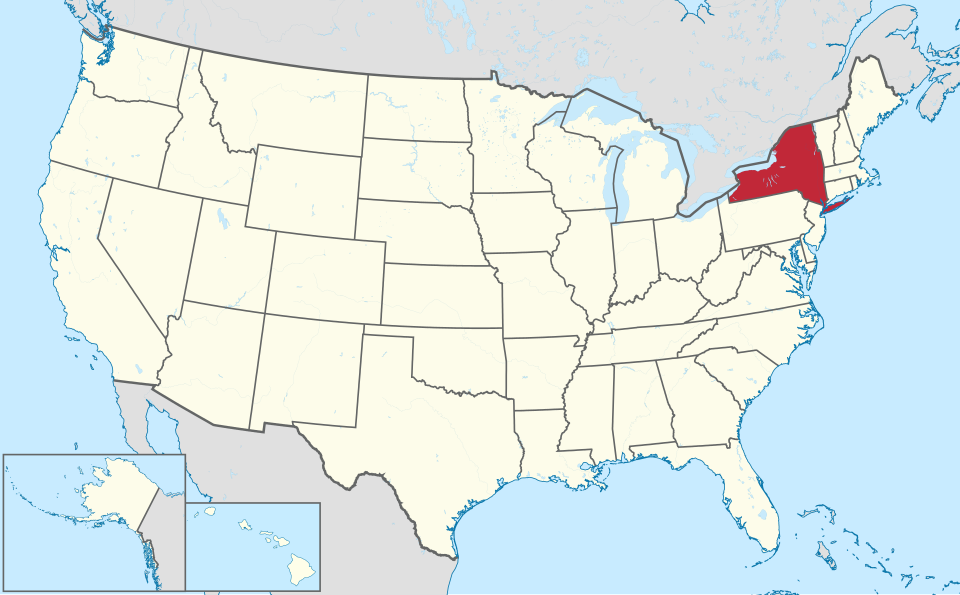
New York State is home to a diverse and aging population. As of 2024, the state’s total population is approximately 19.9 million, with an estimated 3.4 million residents aged 65 and older — making up 17.4% of the state’s population. Many live in high-density urban and suburban areas where online scams and financial exploitation are a growing threat.
New York’s top three cities by population, and leading zones for elder-focused fraud complaints, are:
- New York City (approx. 8.5 million people)
- Buffalo (approx. 275,000 people)
- Rochester (approx. 210,000 people)
Older adults in these regions face an escalating threat. In 2025, New York seniors lost $409 million to fraud (+59% from 2024). Investment scams more than doubled to $176 million (+139%), and tech support fraud reached $62 million. Notably, lottery/sweepstakes fraud more than quadrupled (+358%), while extortion was the only major category to fall (-80%).
II. 2025 Victim Report: How Scammers Targeted New York’s Seniors
In 2025, New York had 8,537 victims aged 60+ who reported losses totaling $408,741,632 — up 37% in victims and 59% in losses compared to 2024 (6,227 victims / $258M).
Source: FBI IC3 2025 Annual Report. New York ranked #4 nationally for elder fraud losses. View national statistics.
Loss by Crime Type
| Crime Type | 2025 Loss | 2024 Loss | Change |
| Investment | $176,222,027 | $73,743,683 | +139% |
| Tech Support | $62,306,320 | $45,969,834 | +36% |
| Romance | $28,494,780 | $21,113,070 | +35% |
| Lottery/Sweepstakes | $7,302,616 | $1,593,581 | +358% |
| Extortion | $1,096,111 | $5,519,670 | -80% |
| Government Impersonation | $30,654,073 | $14,771,954 | +108% |
Elder Fraud Loss Trajectory — New York
5-Year Elder Fraud Trend — New York (2021—2025)
| Year | Victims (60+) | Total Loss | YoY Change | Nat’l Rank |
| 2021 | 5,277 | $130,238,560 | — | #3 |
| 2022 | 4,239 | $212,045,216 | +63% | #4 |
| 2023 | 4,327 | $203,437,635 | -4% | #4 |
| 2024 | 6,227 | $257,704,709 | +27% | #4 |
| 2025 | 8,537 | $408,741,632 | +59% | #4 |
| 5-Year Total | 28,607 | $1,212,167,752 | +214% (2021—2025) | — |
Source: FBI Internet Crime Complaint Center (IC3) Annual Reports, 2021—2025. Covers victims aged 60 and older. National rank is by total dollar loss among 52 states/territories. National totals: $1.7B (2021), $3.1B (2022), $3.4B (2023), $4.9B (2024), $7.7B (2025) — $20.8 billion stolen from American seniors over five years.
Top Crime Types Targeting New York Seniors (2025 vs. 5-Year)
| Crime Type | 2025 Victims | 2025 Loss | 5-Year Total | Growth (2021—25) |
| Investment | 822 | $176,222,027 | $374,491,798 | +937% |
| Tech Support | 1,176 | $62,306,320 | $200,670,848 | +280% |
| BEC | 271 | $41,172,206 | $185,638,327 | -4% |
| Gov. Impersonation | 547 | $30,654,073 | $102,970,498 | +742% |
| Romance | 489 | $28,494,780 | $110,620,726 | +8% |
| Personal Data Breach | 733 | $18,618,113 | $71,770,361 | +68% |
Top 6 crime types by 2025 losses. Growth calculated from 2021 to 2025. For national crime type trends, see our Crime Type Migration Analysis.
What the data reveals: New York’s elder fraud losses reached $409 million in 2025, up 59% from $258 million in 2024, with 8,537 seniors victimized. Investment scams more than doubled to $176 million (+139%), now accounting for 43% of all losses. Lottery and sweepstakes fraud more than quadrupled (+358% to $7.3 million), while extortion was the only major category to decrease (-80%). Romance scams rose a more moderate 35% to $28.5 million. Statewide, that comes to roughly one senior victim for every 2,327 New York residents.
National context: New York ranks #4 in total losses but only #45 in per-capita victim rate (42.97 per 100,000) — the widest gap between total and per-capita rankings of any major state. An individual New York senior is less likely to report being victimized than seniors in 44 other states, despite the state’s enormous aggregate losses. This is partly because New York’s 3.4 million residents over 65 represent a large denominator. The sharp decrease in extortion fraud suggests that targeted enforcement or awareness efforts may be working in that category.
For the full national picture, including how New York compares to every other state, visit our national hub page with interactive data and rankings.
III. Emergency & Official Contacts
Local Police Departments – Financial Crimes & Elder Units
1. NYPD – Financial Crimes Task Force (New York City)
- Phone: (646) 610-5000 (non-emergency)
- Website: www.nyc.gov/nypd
- Tip: Request connection to Financial Crimes or Special Victims Division for elder abuse.
2. Buffalo Police Department – Fraud Unit
- Phone: (716) 851-4444 (non-emergency)
- Website: www.buffalony.gov
- Ask for Economic Crimes or Senior Services Unit.
3. Rochester Police Department – Elder Abuse Resources
- Phone: (585) 428-6720 (non-emergency)
- Website: www.cityofrochester.gov/departments/rochester-police-department
- Request to report elder fraud or suspicious financial activity.
FBI & Federal Reporting Resources
FBI New York Field Office
- Phone: (212) 384-1000
- Website: www.fbi.gov/contact-us/field-offices/newyork
Internet Crime Complaint Center (IC3)
- Website: www.ic3.gov
- Use to report elder-targeted cyber frauds including phishing, impersonation, and investment scams.
New York Attorney General – Elder Fraud & Abuse
Office of the NYS Attorney General – Elder Abuse Bureau
- Elder Hotline: (800) 771-7755
- Website: ag.ny.gov/publications/smart-seniors
Services include:
- Investigation of elder fraud and identity theft
- Coordination with local law enforcement
- Victim services and legal guidance
Additional Elder Protection Services
New York State Office for the Aging (NYSOFA)
- Help Line: (800) 342-9871
- Website: www.aging.ny.gov
- Connects older adults and caregivers with local programs, fraud protection tools, and APS.
Adult Protective Services (APS) – NY State
- Contact through local county Department of Social Services
- General Information: www.ocfs.ny.gov/main/psa
- Call 311 in NYC or your local social services office statewide.
Senior Medicare Patrol (SMP) – New York
- Phone: (800) 333-4374
- Website: www.nysenior.org
- Helps detect and prevent Medicare fraud, billing scams, and benefit abuse.
NYC Department for the Aging – Elder Abuse & Fraud Services
- Phone: (212) 244-6469
- Website: www.nyc.gov/aging
Protect Yourself and Others
- Seniors in New York State report tens of thousands of fraud incidents annually — most go unreported.
- Save these numbers or print and share them with a trusted friend or caregiver.
- Stay informed about common scams by visiting our Education Center.
- If something feels wrong — call. Report. Speak up. You are not alone.

Recent New York scam news
Recent news coverage of scams affecting New York seniors, updated from our alerts desk. Each item links to the original outlet; victims and defendants are kept anonymous.
NYPD and New York's attorney general warn of a gold bar scam that has cost older New Yorkers more than $100 million
The NYPD's Financial Crimes Task Force says a gold bar scam has cost hundreds of older New Yorkers more than $100 million, with some individual losses reaching into the millions. The scheme typically starts with a fake computer pop-up claiming to be from Microsoft, warning the device is infected and giving a number to call; the call leads victims to grant remote access to their computer, after which scammers follow up posing as the U.S. Treasury Department or police, telling the victim their money is at risk unless they convert it to gold bars for 'safekeeping.' A courier then arrives at the victim's home to collect the gold, sometimes using a code word to seem legitimate. New York Attorney General Letitia James has now issued her own statewide consumer alert on the scheme, calling it 'flat-out cruel' and asking anyone targeted to report it to her office as well as the NYPD. The advice from both offices is the same: if a pop-up or caller asks you to grant remote computer access or convert your savings to gold, hang up, log off, and do not engage, and never move money because someone on the phone told you to.
Read at ABC7 New York (WABC) →Suffolk County officials warn of a growing gold bar scam targeting Long Island seniors
Suffolk County officials are warning Long Island residents about a 'gold bar scam' that has turned up in more than a dozen cases so far this year. Scammers posing as government officials, tech support agents, or bank employees keep victims on the phone for hours, convince them their money is at risk, and pressure them to withdraw savings, convert it into gold bars, and hand the gold to a courier for 'safekeeping.' No legitimate agency or bank will ever ask someone to buy gold or hand valuables to a stranger, so the safe move is to slow down, hang up, and verify by calling the agency or bank back using a number you look up yourself.
Read at ABC7 New York →Community leaders bring awareness to Elder Abuse Day amid rising online fraud cases
Local leaders mark Elder Abuse Awareness Day as online fraud cases against older residents keep rising.
Read at BTPM →Oneida County to host elder abuse awareness and prevention events
Oneida County is hosting sessions to help seniors identify scams and learn what to do if they are targeted.
Read at Spectrum News →Saratoga County hosts elder fraud awareness events in June
A New York sheriff's office will hold two June talks to help older adults spot scams after a recent local case.
Read at WNYT NewsChannel 13 →New Yorkers lost more than $700 million to fraud last year
New Yorkers lost over $700 million to fraud last year, with older residents increasingly targeted, officials say.
Read at WNBF →IV. Learn More: New York Scam Prevention Guides
Explore New York-specific guides on the most common scams targeting seniors in your state:
- Tech Support Scams in New York — Learn to recognize fake pop-ups, phone calls, and remote access schemes.
- Investment Scams in New York — Protect your retirement savings from fraudulent advisors and crypto scams.
- Romance Scams in New York — Spot the warning signs of fake online relationships designed to steal money.
- Government Impersonation Scams in New York — Know what real government agencies will never ask you to do.
- How to Report Scams in New York — Step-by-step guide to reporting fraud and starting recovery.
For national-level data on each scam type, see our Investment, Tech Support, Romance, and Government Impersonation national guides.
See how New York compares. Curious where New York ranks in the national picture? Stolen Trust, our 2026 special study, ranks every state and territory using five years of FBI data and lays out one practical plan to fix elder fraud.