

Senior Scam Prevention & Fraud Resources in North Carolina
North Carolina seniors reported $164 million in elder fraud losses to the FBI in 2025, with 5,942 victims aged 60 and older. This page provides North Carolina-specific scam prevention resources, official reporting contacts, and five years of FBI elder fraud data for the state.
Already been scammed? Read our First 24 Hours Emergency Guide for critical steps to take immediately.
I. Overview: North Carolina’s Senior Population & Key Cities
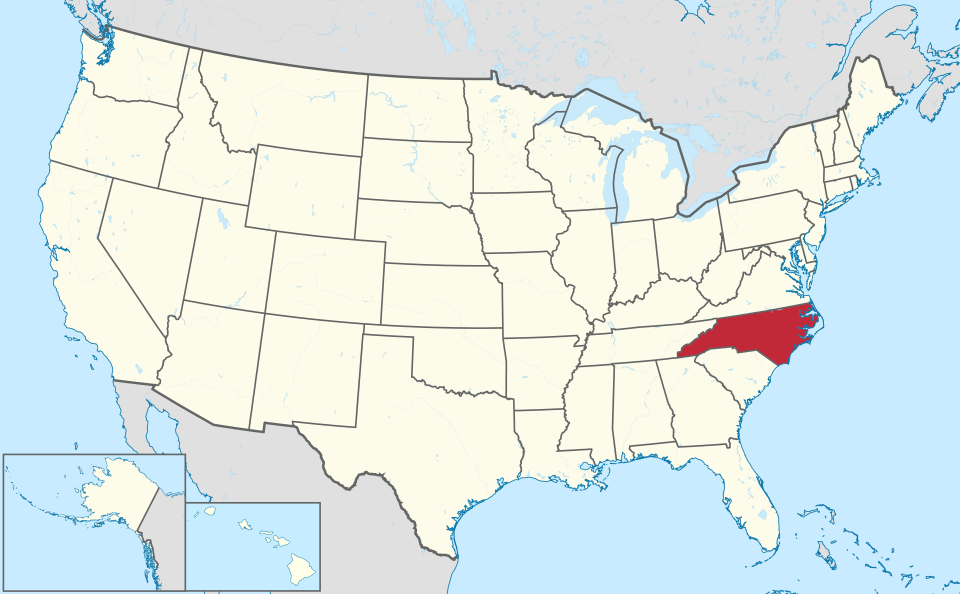
North Carolina is one of the fastest-growing states in the U.S., especially among retirees. As of 2024, the state’s population is estimated at 10.9 million, with more than 1.8 million residents aged 65 and older, about 16% of the total population. This significant and growing senior demographic makes North Carolina a frequent target for fraudsters using online scams, impersonation, and phishing tactics to exploit older adults.
Seniors in North Carolina are most concentrated in its largest cities:
- Charlotte (approx. 900,000 people)
- Raleigh (approx. 480,000 people)
- Greensboro (approx. 300,000 people)
These urban centers rank high in fraud reports — and the 2025 data confirms a sharp escalation. North Carolina seniors lost $164 million, up 88% from 2024. Investment scams more than doubled to $76 million (+129%), tech support fraud rose 53%, and lottery/sweepstakes rose 82% to $5 million.
II. 2025 Victim Report: How Scammers Targeted North Carolina’s Seniors
In 2025, North Carolina had 5,942 victims aged 60+ who reported losses totaling $164,214,173 — up 18% in victims and 88% in losses compared to 2024 (5,026 victims / $87M).
Loss by Crime Type
| Crime Type | 2025 Loss | 2024 Loss | Change |
| Investment | $75,513,871 | $33,012,508 | +129% |
| Tech Support | $22,774,888 | $14,890,157 | +53% |
| Romance | $14,261,724 | $12,785,251 | +12% |
| Lottery/Sweepstakes | $5,055,866 | $2,777,281 | +82% |
| Extortion | $1,054,233 | $536,191 | +97% |
| Government Impersonation | $8,176,425 | $5,032,613 | +62% |
Elder Fraud Loss Trajectory — North Carolina
5-Year Elder Fraud Trend — North Carolina (2021—2025)
| Year | Victims (60+) | Total Loss | YoY Change | Nat’l Rank |
| 2021 | 2,157 | $29,590,581 | — | #15 |
| 2022 | 1,959 | $63,464,255 | +114% | #14 |
| 2023 | 2,427 | $77,613,765 | +22% | #12 |
| 2024 | 5,026 | $87,199,967 | +12% | #16 |
| 2025 | 5,942 | $164,214,173 | +88% | #14 |
| 5-Year Total | 17,511 | $422,082,741 | +455% (2021—2025) | — |
Source: FBI Internet Crime Complaint Center (IC3) Annual Reports, 2021—2025. Covers victims aged 60 and older. National rank is by total dollar loss among 52 states/territories. National totals: $1.7B (2021), $3.1B (2022), $3.4B (2023), $4.9B (2024), $7.7B (2025) — $20.8 billion stolen from American seniors over five years.
Top Crime Types Targeting North Carolina Seniors (2025 vs. 5-Year)
| Crime Type | 2025 Victims | 2025 Loss | 5-Year Total | Growth (2021—25) |
| Investment | 478 | $75,513,871 | $148,715,240 | +3,195% |
| Tech Support | 599 | $22,774,888 | $68,139,024 | +674% |
| Romance | 312 | $14,261,724 | $59,478,391 | +33% |
| BEC | 122 | $11,466,871 | $49,610,585 | +56% |
| Gov. Impersonation | 374 | $8,176,425 | $23,876,414 | +304% |
| Personal Data Breach | 375 | $6,595,561 | $14,859,630 | +1,568% |
Top 6 crime types by 2025 losses. Growth calculated from 2021 to 2025. For national crime type trends, see our Crime Type Migration Analysis.
What the data reveals: North Carolina’s elder fraud losses reached $164 million in 2025, up 88% from $87 million in 2024, with nearly 6,000 seniors victimized. Investment scams more than doubled to $76 million (+129%), now accounting for 46% of all losses. Lottery/sweepstakes fraud rose 82% from $2.8 million to over $5 million. Romance scams grew a modest 12%, and extortion nearly doubled (+97%). Statewide, that comes to roughly one senior victim for every 1,859 North Carolina residents.
National context: North Carolina ranks #14 in total losses and #31 in per-capita victim rate (53.79 per 100,000). With 1.8 million residents over 65 and a rapidly growing retirement population, the state faces increasing exposure. The 88% year-over-year loss increase significantly exceeds the national average of 57%.
For the full national picture, including how North Carolina compares to every other state, visit our national hub page with interactive data and rankings.
III. Emergency & Official Contacts
Local Police Departments – Elder Fraud & Financial Crimes
1. Charlotte-Mecklenburg Police Department – Fraud Unit
- Phone: (704) 336-7600 (non-emergency)
- Website: charlottenc.gov/cmpd
- Ask to speak with Financial Crimes or Elder Abuse Investigations.
2. Raleigh Police Department – Economic Crimes Unit
- Phone: (919) 996-3335 (non-emergency)
- Website: raleighnc.gov/police
- Request a fraud report involving a senior or vulnerable adult.
3. Greensboro Police Department – Criminal Investigations
- Phone: (336) 373-2222 (non-emergency)
- Website: www.greensboro-nc.gov
- Tip: Ask for assistance with elder-targeted scams or identity theft.
FBI & Federal Reporting Tools
FBI Charlotte Field Office (serving statewide)
- Phone: (704) 672-6100
- Website: www.fbi.gov/contact-us/field-offices/charlotte
Internet Crime Complaint Center (IC3)
- Website: www.ic3.gov
- Use to report elder fraud, phishing, financial exploitation, and scam emails.
North Carolina Attorney General – Elder Protection & Fraud
NC Department of Justice – Consumer Protection Division
- Consumer Protection Hotline: (877) 566-7226
- Website: www.ncdoj.gov
- Offers a dedicated senior protection section to report scams and receive legal help.
Statewide Elder Assistance Services
North Carolina Adult Protective Services (APS)
- To report abuse, neglect, or exploitation:
Contact the local Department of Social Services (DSS) in your county, or - Call the NCDHHS CARE-LINE: (800) 662-7030 (they will route you to your county DSS)
- Website: www.ncdhhs.gov
Senior Medicare Patrol (SMP) – North Carolina
- Phone: (855) 408-1212
- Website: www.ncshiip.com
- A program under SHIIP (Seniors’ Health Insurance Information Program) that helps detect and report Medicare fraud.
NC Department of Health and Human Services – Aging and Adult Services
- Phone: (919) 855-3400
- Website: www.ncdhhs.gov/divisions/division-aging
Stay Ahead of Scams
- Older adults in North Carolina report millions in losses each year — don’t let it happen to you or your loved ones.
- Save these contact numbers, or share this page with your community.
- Visit our Learning Center to explore red flags, real scam examples, and how to take action.
- See something suspicious? Report it immediately.
Recent North Carolina scam news
Recent news coverage of scams affecting North Carolina seniors, updated from our alerts desk. Each item links to the original outlet; victims and defendants are kept anonymous.
New Hanover County, North Carolina officer stops an 89-year-old's $9,000 crypto scam at a gas station
An 89-year-old New Hanover County, North Carolina woman received a fake message claiming she owed $390 to Geek Squad, and the scammers escalated from there, eventually telling her she needed to send $10,000 to fix a problem with a supervisor. She had already withdrawn more than $9,000 in cash and was at a Bitcoin ATM at a local gas station when a Wilmington police officer noticed she did not fit the profile of someone who normally uses these machines and stopped to ask questions. He walked her to the actual repair shop to confirm the message was fake, then escorted her to her bank, where the $9,000 was returned to her account. Police remind residents that no legitimate company or agency will ever demand payment through a Bitcoin ATM, gift cards, or cryptocurrency.
Read at WWAY TV3 →Stokes County, North Carolina sheriff to host a free scam-prevention presentation
The Stokes County, North Carolina Sheriff's Office is holding a free community presentation on Tuesday, August 11 at the King Senior Services Center to help residents spot and prevent scams. The session covers phone and text message scams, Medicare and Social Security fraud, identity theft, online shopping and banking scams, romance and investment scams, and grandparent scams, along with guidance on what to do if you're targeted. Free, local events like this give seniors and their families a chance to learn current warning signs and ask questions directly.
Read at abc45 (WFMY) →Wilmington, North Carolina officer stops a $10,000 crypto scam in progress at a gas station
A Wilmington Police Department officer on a routine gas station patrol noticed an elderly woman standing at a Bitcoin kiosk with thousands of dollars in cash while on her cellphone, a telltale sign of a crypto scam in progress. Scammers posing as tech support had convinced her a problem needed to be fixed by withdrawing cash and depositing it into the machine. The officer asked her to stop the deposit, took her phone to confront the callers directly, and stopped the transfer before any money was lost. Police remind residents that no legitimate business or government agency will ever ask for payment through a Bitcoin machine, gift cards, or cryptocurrency; if you're ever told to do this, slow down, hang up, and call police before sending anything.
Read at WWAY TV3 →Free StarComm workshop in Clinton, North Carolina teaches seniors to spot scams
Star Communications is hosting a free workshop on August 12 in Clinton, North Carolina to help seniors recognize and avoid scams, protect personal information, and stay safer online. The session covers password security, how to spot a fake email by checking the real sender address, common impersonation tactics, phone scams that use voice-imitation technology, and the social-engineering tricks scammers use to draw out personal details. The event includes a presentation followed by a question-and-answer session, with seating limited to about 50 people; registration is available in person, online, or by phone.
Read at Sampson Independent →Kinston, North Carolina police host a senior scam-prevention town hall
The Kinston Police Department is holding a community town hall at the Neuse Regional Library for seniors, caregivers, and family members to learn about recognizing common scams, preventing financial exploitation, and protecting older adults from fraud and elder abuse. Attendees can ask questions and raise concerns directly with officers. Free, local events like this give older adults and their families a chance to stay current on the scams active in their area and to slow down and ask questions before a real threat reaches them.
Read at WCTI ABC 12 →After falling victim, local woman raises awareness about online scams
A North Carolina woman who fell victim to an online scam now works to warn others.
Read at Goldsboro News-Argus →IV. Learn More: North Carolina Scam Prevention Guides
Explore North Carolina-specific guides on the most common scams targeting seniors in your state:
- Tech Support Scams in North Carolina — Learn to recognize fake pop-ups, phone calls, and remote access schemes.
- Investment Scams in North Carolina — Protect your retirement savings from fraudulent advisors and crypto scams.
- Romance Scams in North Carolina — Spot the warning signs of fake online relationships designed to steal money.
- Government Impersonation Scams in North Carolina — Know what real government agencies will never ask you to do.
- How to Report Scams in North Carolina — Step-by-step guide to reporting fraud and starting recovery.
For national-level data on each scam type, see our Investment, Tech Support, Romance, and Government Impersonation national guides.
See how North Carolina compares. Curious where North Carolina ranks in the national picture? Stolen Trust, our 2026 special study, ranks every state and territory using five years of FBI data and lays out one practical plan to fix elder fraud.