

Protecting Seniors From Investment Scams: How to Spot, Prevent, and Report Fraud
Investment scams stole $3.5 billion from American seniors in 2025 — nearly half of all elder fraud losses by dollar amount, the largest category by far. The most damaging variants combine AI chatbots, fake trading dashboards showing fabricated returns, deepfake celebrity endorsements, and “pig butchering” relationships built over months. The single best defense is to verify any investment opportunity at brokercheck.finra.org before sending money, and to never act on unsolicited contact — legitimate firms do not cold-call retirees.
Last updated: May 15, 2026 · Primary sources: FBI IC3 2025 Annual Report, FTC, DOJ Elder Justice, plus our news corpus of 1,910 parseable elder-fraud articles.
- What Is an Investment Scam Targeting Seniors?
- How Do Investment Scams Work?
- Common Types of Investment Scams Affecting Seniors
- US Heat Map – Investment Scams Targeting Seniors (2024)
- 2025 Data Update — State Rankings
- Red Flags of an Investment Scam
- Why Are Seniors Targeted?
- How To Protect Yourself
- If You Suspect an Investment Scam
Investment scams are the #1 financial threat to American seniors. In 2025, adults aged 60 and older lost $3.5 billion to investment fraud — more than any other crime type — with over 16,900 victims reported to the FBI. This guide covers how investment scams targeting seniors work, the warning signs to watch for, and what steps you can take to protect yourself and your loved ones.
Already been scammed? Read our First 24 Hours Emergency Guide for critical steps to take immediately.
Audience-Specific Guides: Investment fraud hits these audiences hardest. See our: Recent Retiree Scam Protection — 401(k), IRA, and pension-targeted investment fraud; Cryptocurrency & Pig Butchering Scams — the largest single elder-fraud category by dollar volume; Life Insurance, Pension Survivor & Annuity Scams Against Widows — predatory annuity sales after life insurance settlements; VA Benefits Scams — investment fraud targeting veteran benefits.
Not sure what a term means? Our Scam & Cybersecurity Glossary explains 77 common scam and cybersecurity terms in plain English.
2025 FBI IC3 Data Update: Investment scams remain the #1 threat to seniors in America. In 2025, older adults lost $3.52 billion to investment fraud — up from $1.83 billion in 2024 (a +92% year-over-year increase), accounting for 45% of all elder fraud losses. Over 16,900 seniors were victimized. Cryptocurrency-related investment scams are a major driver. See the updated state-by-state data below.
What Is an Investment Scam Targeting Seniors?
An investment scam targeting seniors is a fraudulent scheme in which criminals attempt to trick older adults into handing over money or personal information by promising high, low-risk, or guaranteed returns on a fake or misleading investment opportunity. These scams often use sophisticated tactics, sometimes exploiting trust, isolation, or lack of up-to-date financial knowledge, to convince seniors to invest in non-existent, worthless, or high-risk ventures.
How Do Investment Scams Work?
Investment scammers may contact seniors by phone, email, social media, mail, or even in person. They often pose as:
- Financial advisors, brokers, or government officials
- Representatives of legitimate-sounding companies or organizations
- New friends or romantic interests met online
Scammers typically use high-pressure tactics, such as:
- Promising unusually high or guaranteed returns with little or no risk
- Urging quick decisions to “lock in” the opportunity
- Using complex jargon or fake documents to appear credible
- Discouraging consultation with family or professional advisors
Common Types of Investment Scams Affecting Seniors:
- Ponzi or pyramid schemes (where returns to earlier investors are paid from new victims’ money)
- Fake stocks, bonds, or cryptocurrency investments
- Real estate or timeshare scams
- Precious metals, oil, or rare coin schemes
- “Senior-only” investment seminars or free lunch presentations
US Heat Map – Investment Scams Targeting Seniors (2024)
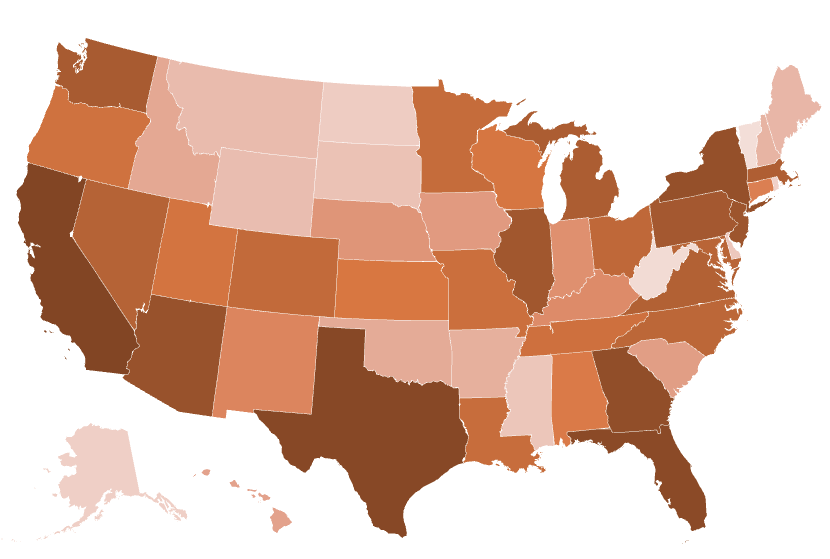
2025 Data Update — Investment Scam Losses by State
Source: FBI IC3 2025 Annual Report. National total: $3,519,296,354 in losses from 16,926 senior victims. View all crime types on the national hub page.
| Rank | State / Territory | 2025 Loss | 2024 Loss | Change |
| 1 | California | $678,989,713 | $350,458,561 | +94% |
| 2 | Texas | $336,806,099 | $308,437,815 | +9% |
| 3 | Florida | $322,464,043 | $153,438,979 | +110% |
| 4 | New York | $176,222,027 | $73,743,683 | +139% |
| 5 | Arizona | $146,557,966 | $68,021,190 | +115% |
| 6 | New Jersey | $133,882,701 | $65,981,098 | +103% |
| 7 | Georgia | $118,131,006 | $82,957,738 | +42% |
| 8 | Virginia | $103,956,158 | $41,242,306 | +152% |
| 9 | Pennsylvania | $98,316,604 | $56,227,739 | +75% |
| 10 | Michigan | $88,363,329 | $42,618,288 | +107% |
| 11 | Maryland | $84,189,317 | $37,370,364 | +125% |
| 12 | Ohio | $81,130,382 | $31,963,744 | +154% |
| 13 | Washington | $77,516,790 | $44,340,684 | +75% |
| 14 | North Carolina | $75,513,871 | $33,012,508 | +129% |
| 15 | Illinois | $73,129,501 | $57,486,686 | +27% |
| 16 | Colorado | $69,426,486 | $26,479,901 | +162% |
| 17 | Tennessee | $51,651,454 | $17,127,985 | +202% |
| 18 | Massachusetts | $50,246,701 | $41,398,272 | +21% |
| 19 | Nevada | $48,292,530 | $40,970,849 | +18% |
| 20 | Wisconsin | $43,608,456 | $15,857,817 | +175% |
| 21 | Missouri | $40,250,754 | $18,294,933 | +120% |
| 22 | Hawaii | $38,736,570 | $9,809,411 | +295% |
| 23 | South Carolina | $37,827,948 | $10,104,223 | +274% |
| 24 | Utah | $32,435,264 | $16,504,979 | +97% |
| 25 | Connecticut | $31,561,072 | $12,007,107 | +163% |
| 26 | Minnesota | $31,468,472 | $21,997,390 | +43% |
| 27 | Kentucky | $30,703,914 | $10,957,450 | +180% |
| 28 | Oregon | $29,006,788 | $16,817,393 | +72% |
| 29 | Kansas | $27,465,479 | $14,837,122 | +85% |
| 30 | Alabama | $24,766,942 | $13,314,548 | +86% |
| 31 | New Mexico | $24,684,170 | $11,300,680 | +118% |
| 32 | Oklahoma | $24,006,896 | $8,274,433 | +190% |
| 33 | Idaho | $19,628,092 | $8,504,289 | +131% |
| 34 | Indiana | $18,105,910 | $10,565,371 | +71% |
| 35 | Mississippi | $16,436,648 | $4,295,035 | +283% |
| 36 | Arkansas | $13,838,274 | $7,394,303 | +87% |
| 37 | Nebraska | $13,823,318 | $10,451,810 | +32% |
| 38 | Louisiana | $13,353,766 | $20,842,485 | -36% |
| 39 | Iowa | $12,941,508 | $10,361,761 | +25% |
| 40 | New Hampshire | $11,703,084 | $5,893,104 | +99% |
| 41 | Maine | $10,479,890 | $5,450,171 | +92% |
| 42 | Montana | $9,482,563 | $5,352,023 | +77% |
| 43 | Delaware | $7,174,698 | $3,852,275 | +86% |
| 44 | West Virginia | $6,270,768 | $683,320 | +818% |
| 45 | Alaska | $6,047,069 | $1,702,443 | +255% |
| 46 | District of Columbia | $5,717,570 | $776,156 | +637% |
| 47 | Rhode Island | $5,622,901 | $1,620,381 | +247% |
| 48 | Puerto Rico | $3,967,090 | $1,611,302 | +146% |
| 49 | South Dakota | $3,359,957 | $4,594,352 | -27% |
| 50 | Vermont | $2,686,833 | $496,333 | +441% |
| 51 | Wyoming | $2,072,493 | $4,609,991 | -55% |
| 52 | North Dakota | $1,502,039 | $3,043,840 | -51% |
Red Flags of an Investment Scam:
- Promises of high, steady, or guaranteed returns with little risk
- Unregistered investments or sellers
- Requests for secrecy or urgency
- Unsolicited offers or pressure to invest quickly
- Difficulty withdrawing funds or getting clear answers
Why Are Seniors Targeted?
- Many seniors have retirement savings or home equity
- Scammers assume seniors are more trusting, less likely to report, or may be less familiar with new investment products (such as cryptocurrency)
How to Protect Yourself:
- Research any investment and check for registration with the U.S. Securities and Exchange Commission (SEC) or state securities regulators
- Be skeptical of unsolicited investment offers, especially those that promise quick or guaranteed profits
- Talk to trusted family members or a qualified financial advisor before making major financial decisions
- Never send money or provide personal information to someone you haven’t met in person or can’t verify
- You can follow our training to further enhance your knowledge and skills against invesment scam.
If You Suspect an Investment Scam:
- Report it to your local police, and FBI’s Internet Crime Complaint Center (ic3.gov)
- Notify your bank or financial institution immediately if money has been transferred
Remember: If it sounds too good to be true, it probably is. When in doubt, slow down and get a second opinion.
Documented Investment Scam Cases
Three reported cases from federal indictments, sentencings, and news investigations — with identifying details removed, plus dates and dollar amounts — illustrating how investment scams play out against older adults in practice.
Major U.S. indictment against an industrial-scale pig-butchering network (Oct. 2025)
U.S. prosecutors in New York unsealed a sweeping indictment alleging one of the world’s largest industrialized pig-butchering operations — powered by forced labor in scam compounds and earning, at peak, an alleged $30 million per day. Proceeds reportedly flowed into Picasso artwork, private jets, and London real estate. The case marks the largest U.S. enforcement action against a transnational crypto-investment fraud network and signals where the proceeds of senior-targeted pig-butchering scams actually flow. Source: CNN, Oct. 25, 2025.
Texas woman, 74 — $600,000 lost to AI-enhanced “Elon Musk” investment scam (Oct. 2025)
A 74-year-old Texas woman was befriended on Facebook by scammers impersonating Elon Musk, who promised her $56 million in returns if she invested first. Over months of messages she sent $600,000. A federal prosecution in Florida sentenced the money mule who laundered $250,000 of the stolen funds; restitution was ordered for the full amount. Source: Bradenton Herald via Yahoo News, Oct. 27, 2025.
Carlsbad woman, 80s — $1.49 million stolen via gold-bar “safekeeping” scheme (Dec. 2025)
A federal prosecution in San Diego ended with two guilty pleas in a hybrid tech-support / government-impersonation scam that drained $1.49 million from a Carlsbad, California woman in her 80s. The scam began with a pop-up on her computer claiming she had been hacked. Scammers then told her the “safe” place for her savings was gold bars stored in a fictitious U.S. Treasury locker. Over two months she converted $1,335,000 to gold via three wire transfers and handed the bars to a courier. The FBI ran a sting operation on the final $100,000 pickup. Source: CBS 8 San Diego, Dec. 4, 2025.
Frequently Asked Questions
Direct answers to the questions older adults, caregivers, and journalists most often ask about investment scams targeting seniors.
What is an investment scam targeting seniors?
An investment scam targeting seniors is a fraud scheme that promises high returns — often via crypto trading, fake brokerages, gold conversion, or “exclusive” opportunities — and steers older adults into depositing money into accounts the victim cannot withdraw from. In 2025, the FBI reported $3.5 billion in losses for victims age 60+ across categories including pig butchering, fake trading platforms, and crypto fraud.
How much do investment scams cost American seniors?
The FBI Internet Crime Complaint Center (IC3) recorded $3.5 billion in investment scam losses from victims age 60 and older in 2025 — nearly half of all elder fraud losses by dollar amount. This is widely understood to be a floor; the FTC estimates only about 4.8% of fraud victims report, so the true scale is likely substantially higher.
What is “pig butchering”?
Pig butchering is a long-form investment scam where criminals build a months-long social relationship with the victim — often starting with a wrong-number text — before steering them into a fake cryptocurrency trading platform. The platform shows fabricated returns to encourage larger deposits, then refuses withdrawals or demands “tax” payments. It is the single largest dollar-loss subcategory of elder fraud.
How do I check if a brokerage or financial advisor is legitimate?
Verify any U.S. firm or individual at brokercheck.finra.org (operated by FINRA) and at the SEC’s investor.gov. Cross-check state registration with your state securities regulator. If a firm cannot be found in any of these databases, do not deposit money. Most international “exchanges” promoted via social media or messaging apps are not registered in the U.S.
What are the red flags of an investment scam?
Unsolicited contact (text, social media, dating app), promised returns above 10–15% annually, pressure to act quickly, requirement to deposit via cryptocurrency, a “personal advisor” you only ever talk to online, a trading dashboard you can watch but cannot withdraw from, and any request for an additional “tax” or “fee” to release your funds.
My parent already deposited money. What should we do?
Stop any pending wire transfers immediately by calling your bank’s fraud department. If money was sent via crypto, contact the exchange’s fraud-reporting channel (Coinbase, Kraken, Binance.US all have these). Report at ic3.gov — specifically mention any crypto wallet addresses involved — and at reportfraud.ftc.gov. Our First 24 Hours Emergency Guide walks through the full sequence.
Can investment scam money be recovered?
Recovery rates are low: the FBI recovered approximately $561 million of the $16.6 billion reported lost across all crime types in 2024. Cryptocurrency transactions are particularly hard to reverse once confirmed on the blockchain. However, fast action within the first 24–72 hours dramatically improves the odds — some bank-to-bank wires can be recalled if reported quickly. Beware of any “recovery firm” that contacts you unsolicited; legitimate recovery goes through ic3.gov and FTC, both free.
Are AI deepfakes being used in investment scams?
Yes — increasingly. AI is used to generate fake celebrity endorsement videos (Elon Musk, Warren Buffett), deepfake video calls with fake “account managers”, AI-generated trading dashboards, and AI chatbots posing as personal financial advisors. If you see a celebrity promoting an investment in a video ad, assume it is a deepfake unless the endorsement also appears on the celebrity’s verified social media account or in mainstream news coverage.
Why are seniors specifically targeted for investment scams?
Seniors hold the majority of accumulated savings and retirement assets, are statistically less familiar with cryptocurrency mechanics, are more likely to trust phone and relationship-based pitches, and are less likely to report fraud out of shame. Scam operations specifically build call lists of older adults from data brokers and previous scam-victim “sucker lists.”
Where do I report an investment scam?
Report to all of: (1) FBI IC3, (2) FTC ReportFraud, (3) the SEC’s tips and complaints portal, (4) your state Attorney General’s office, and (5) the U.S. Department of Justice Elder Fraud Hotline at 1-833-FRAUD-11 (1-833-372-8311). Filing in multiple places increases the chance of consolidated enforcement action.
State-Specific Investment Scam Resources
Find detailed investment scam prevention guides and local reporting contacts for your state:
- California Investment Scam Resources – $679M lost by CA seniors (2025)
- Texas Investment Scam Resources
- Florida Investment Scam Resources
- New York Investment Scam Resources
- Arizona Investment Scam Resources
- Pennsylvania Investment Scam Resources
- Vermont Investment Scam Resources
View national elder fraud statistics | Find your state Attorney General
Real cases (anonymized from public news coverage)
Recent cases from public news reporting, with names and identifying details removed. Investment scams against seniors continue to grow in both number and loss size — the cases below show how varied the playbook has become.
January 2026 — Palos Hills, Illinois. An elderly woman lost approximately $788,000 — her entire life savings — in an elaborate financial-exploitation scheme. Over a sequence of phone calls, scammers walked her through converting her savings into a mix of cashier’s checks, Bitcoin, and gold purchases. Local police were notified only after the money was gone. As reported by Patch (Palos Hills).
December 2025 — United States (USA Today / TikTok). A 67-year-old man lost approximately $400,000 — his life savings — to scammers posing as federal agents who claimed his identity had been stolen. He moved the money in stages over multiple calls before his adult child realized what had happened. As reported by Yahoo Finance (citing USA Today).
March 2026 — Northern District of Georgia (federal case). A registered investment advisor pleaded guilty in federal court to defrauding an elderly client of nearly $10 million. The case is one of a growing wave of federal prosecutions targeting financial professionals who exploit older clients’ trust. As reported by DOJ press release.
Recent news coverage
Selected recent news coverage on investment scam scams targeting older adults. Updated from our ongoing monitoring of US news sources.
- May 2026 — 2 senior citizens lose RM2.7mil to online investment scams — MSN (MSN)
- May 2026 — Five data broker opt-out myths that leave retirees exposed — AOL.com (AOL)
- Apr 2026 — Identity theft losses surge 70% for older Americans — Fox News (Fox News)
- Apr 2026 — Crypto Scams and Senior Fraud Drive $21 Billion in 2025 Cyber Theft, FBI Reports — Yahoo (Yahoo News)
- Mar 2026 — CSI Partners With Carefull to Expand Elder Fraud Protection Capabilities — Yahoo Finance (Yahoo Finance)
- Mar 2026 — Investment advisor pleads guilty to defrauding elderly client out of nearly $10 million (DOJ press release)
Related guides on this site
- Real cases where senior scam victims got their money back
- Reverse Mortgage Scams
- Bitcoin ATM & Crypto Kiosk Scams
- P2P Payment Scams (Zelle, Venmo, Cash App)
- Transnational Scam Compounds and US Elder Fraud
Sources & verification. Published by HCSK Inc. The information on this page is based on official federal data from the FBI Internet Crime Complaint Center (IC3), the Federal Trade Commission (FTC), and the U.S. Department of Justice. We last checked these figures against the original government sources in June 2026.
The national picture. These scams are part of a much bigger story. In 2025, Americans 60 and older reported losing $7.748 billion to online fraud across 201,266 victims. Read Stolen Trust, our 2026 special study that maps the full elder-fraud landscape, with five years of FBI data and one practical plan to fix it.
Recent Investment Scam News
Recent investment-scam news affecting seniors, updated from our alerts desk. Each item links to the original outlet; victims and defendants are kept anonymous.
Utah lawmakers and businesses discuss stronger coordination against online fraud targeting older adults
KSL reports that Utah leaders and business representatives met to discuss ways to share fraud information faster across state lines and push for more resources against online scams aimed at older Americans. The article cites federal data showing that internet scams cost Americans more than $20 billion in 2025, with crypto scams making up more than $11 billion and AI-related scams approaching $900 million. Utah has also passed a state law requiring warnings and limits on some cryptocurrency kiosk transactions. The takeaway for families is to treat crypto, online investment pitches, and urgent payment demands as high-risk until independently verified.
Read at KSL.com →FBI and GBI warn Georgians as cryptocurrency scams surge, with seniors losing the most
The FBI and Georgia Bureau of Investigation are warning residents about a rise in cryptocurrency scams after a retired Georgia couple lost nearly $800,000 this year when contacts made through WhatsApp convinced them to move their savings into a fake crypto investment account. Investigators say these schemes often start with an unsolicited text, social media message, dating app conversation, or fake job offer from a stranger who spends weeks or months building trust before pushing a cryptocurrency investment. Georgians reported more than $400 million in cybercrime losses last year, with crypto investment scams accounting for nearly half of that total, and officials say AI is making the fake messages, voices, and investment platforms harder to spot. If you lose money, reporting it to local law enforcement within 24 to 48 hours gives investigators the best chance of intercepting the payment, and the safe habit going forward is to never send cryptocurrency to someone you have only met online and to research any investment independently before sending money.
Read at WJBF →FBI warns of new investment scam targeting seniors, millions at risk
The FBI alerts older adults to a new investment scam that could put many seniors' savings at risk.
Read at Yahoo News →Indiana Secretary of State encourages Hoosiers to protect seniors from financial scams
Indiana's top official urges families to help older adults guard against financial scams and exploitation.
Read at 95.3 WIKI →FBI warns of crypto scam using in-person cash couriers targeting seniors
The FBI warns that scammers are now sending couriers to collect cash and gold in person from older victims.
Read at MLive →Sault senior scammed out of life savings hears from federal minister
A Sault woman lost nearly $1 million after an AI deepfake video pushed a fake crypto scheme, drawing a federal minister's attention.
Read at SooToday →