

Senior Scam Prevention and Fraud Resources in Puerto Rico
Puerto Rico seniors reported $8 million in elder fraud losses to the FBI in 2025, with 351 victims aged 60 and older. This page provides Puerto Rico-specific scam prevention resources, official reporting contacts, and five years of FBI elder fraud data for the state.
Already been scammed? Read our First 24 Hours Emergency Guide for critical steps to take immediately.
I. Overview: Puerto Rico’s Senior Population and Key Cities
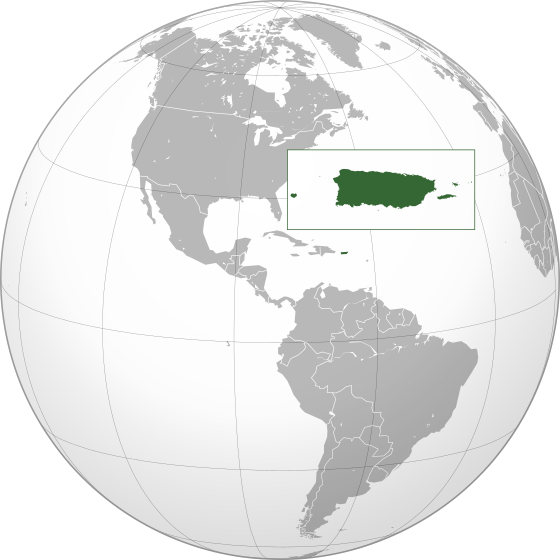
As of 2024, Puerto Rico has a population of approximately 3.2 million, with over 740,000 residents aged 65 and older , accounting for 23.1% of the total population. This makes Puerto Rico one of the oldest jurisdictions in the United States in terms of age distribution.
Puerto Rican seniors face unique challenges. In 2025, losses reached $8.2 million with 351 victims. Investment scams led at $4 million (+146%). Two categories saw dramatic decreases: tech support fell 52% and romance scams dropped 87%. Government impersonation surged 981% to $249K. Language barriers and limited broadband access remain challenges for prevention and reporting.
The areas with the largest senior populations and highest reported fraud activity are:
- San Juan (capital; approx. 320,000 people)
- Bayamón (approx. 160,000 people)
- Ponce (approx. 130,000 people)
II. 2025 Victim Report: How Scammers Targeted Puerto Rico’s Seniors
In 2025, Puerto Rico had 351 victims aged 60+ who reported losses totaling $8,167,452 — up 23% in victims but down 60% in losses compared to 2024 (285 victims / $20M).
Loss by Crime Type
| Crime Type | 2025 Loss | 2024 Loss | Change |
| Investment | $3,967,090 | $1,611,302 | +146% |
| Tech Support | $76,346 | $158,869 | -52% |
| Romance | $141,550 | $1,090,937 | -87% |
| Lottery/Sweepstakes | $1,500 | $2,650 | -43% |
| Extortion | $19,420 | $99,467 | -80% |
| Government Impersonation | $248,519 | $23,000 | +981% |
Elder Fraud Loss Trajectory — Puerto Rico
5-Year Elder Fraud Trend — Puerto Rico (2021—2025)
| Year | Victims (60+) | Total Loss | YoY Change | Nat’l Rank |
| 2021 | 195 | $3,575,884 | — | #45 |
| 2022 | 190 | $2,363,832 | -34% | #52 |
| 2023 | 215 | $2,845,110 | +20% | #52 |
| 2024 | 285 | $20,183,422 | +609% | #39 |
| 2025 | 351 | $8,167,452 | -60% | #50 |
| 5-Year Total | 1,236 | $37,135,700 | +128% (2021—2025) | — |
Source: FBI Internet Crime Complaint Center (IC3) Annual Reports, 2021—2025. Covers victims aged 60 and older. National rank is by total dollar loss among 52 states/territories. National totals: $1.7B (2021), $3.1B (2022), $3.4B (2023), $4.9B (2024), $7.7B (2025) — $20.8 billion stolen from American seniors over five years.
Top Crime Types Targeting Puerto Rico Seniors (2025 vs. 5-Year)
| Crime Type | 2025 Victims | 2025 Loss | 5-Year Total | Growth (2021—25) |
| Investment | 87 | $3,967,090 | $6,368,709 | +1,697% |
| BEC | 11 | $492,542 | $10,203,609 | -75% |
| Personal Data Breach | 23 | $373,098 | $7,000,005 | +12,560% |
| Gov. Impersonation | 20 | $248,519 | $476,974 | +14,020% |
| Romance | 22 | $141,550 | $2,892,123 | -88% |
| Tech Support | 25 | $76,346 | $1,529,594 | +103% |
Top 6 crime types by 2025 losses. Growth calculated from 2021 to 2025. For national crime type trends, see our Crime Type Migration Analysis.
What the data reveals: Puerto Rico’s elder fraud losses totaled $8.2 million in 2025, with 351 seniors victimized. Investment scams grew 146% to $4 million, accounting for nearly half of all losses. The data shows a striking split: two categories saw dramatic decreases — tech support fell 52% and romance scams plunged 87% (from $1.1 million to just $142K) — while government impersonation surged 981% from $23K to $249K.
National context: Puerto Rico ranks #50 in total losses among all 52 states and territories. The 87% romance scam decline and 52% tech support drop are among the steepest decreases nationally in those categories — a potentially positive signal. However, the 981% government impersonation surge and rising investment fraud suggest scammers may be shifting to new tactics. Puerto Rico’s unique combination of Spanish-language targeting, rural isolation, and limited broadband creates distinct vulnerability patterns.
For the full national picture, including how Puerto Rico compares to every other state, visit our national hub page with interactive data and rankings.
III. Emergency and Official Contacts
Local Police Departments – Elder Fraud and Financial Crimes
1. Puerto Rico Police Bureau – San Juan Command
- Phone: (787) 343-2020 (island-wide crime reporting line)
- Website: policia.pr.gov
- Contact to report elder scams, cyber fraud, or financial exploitation.
2. Bayamón Police Area Command
- Phone: (787) 269-2424
- Same island-wide resources apply; use 343-2020 or local station for elder fraud cases.
3. Ponce Police Area Command
- Phone: (787) 284-4040
- Also uses centralized reporting structure through 343-2020.
FBI and Federal Scam Reporting
FBI San Juan Field Office
- Phone: (787) 754-6000
- Website: www.fbi.gov/contact-us/field-offices/sanjuan
- Handles high-level elder fraud, romance scams, cybercrime, and federal offenses.
Internet Crime Complaint Center (IC3)
- Website: www.ic3.gov
- Use to report phishing, tech support scams, crypto fraud, and online elder exploitation.
Puerto Rico Department of Justice – Consumer Protection
Departamento de Asuntos del Consumidor (DACO)
- Consumer Hotline: (787) 722-7555
- Website: www.daco.pr.gov
- Provides consumer fraud investigation and protection services, including for seniors.
Senior Protection Services and Medicare Fraud Support
Puerto Rico Adult Protective Services (Servicios de Protección para Adultos)
- Main Contact: (800) 981-8333 (Department of Family Affairs – ADSEF)
- Website: familia.pr.gov
- Investigates reports of abuse, neglect, and elder financial exploitation.
Puerto Rico Senior Medicare Patrol (SMP)
- Phone: (800) 975-3102
- Website: www.patrullamedicarepr.org
- Offers fraud prevention education and assistance with Medicare-related scams.
Oficina del Procurador de las Personas de Edad Avanzada (OPPEA)
- Phone: (787) 721-6121
- Website: oppea.pr.gov
- Provides legal advocacy, elder abuse reporting, and assistance to seniors and caregivers.
Proteja a sus seres queridos. Infórmese. Denuncie.
- Puerto Rican seniors lose millions of dollars annually to fraud and scams.
- Saving emergency numbers and reporting early can prevent further harm.
- Visit our Education Center for tools, red flags, and multilingual guides.
- Cuando tenga dudas, deténgase, verifique y hable con alguien de confianza.

Recent Puerto Rico scam news
Recent news coverage of scams affecting Puerto Rico seniors, updated from our alerts desk. Each item links to the original outlet; victims and defendants are kept anonymous.
New federal bill would let banks hold transactions up to 90 days to stop wire fraud against seniors
A member of Congress has introduced the Protecting Elders from Wire Fraud Act, which would let banks place a hold of up to 90 days on a transaction leaving a senior's account when financial exploitation is suspected, giving time to determine whether the transaction is legitimate. The bill would also require financial institutions to notify a trusted contact associated with the account when a hold is placed, and it would give banks safe harbor from liability when they act in good faith to prevent a suspected scam. Supporters point to FTC data showing $334 million lost to wire fraud in 2025. The bill is still in the early stages of the legislative process, with no funding details, effective date, or committee action yet reported. The takeaway for families: ask your own bank whether it already offers a trusted-contact option or a hold policy for suspicious transactions, since these tools are becoming more common even before any new federal law passes.
Read at Antelope Valley Press →IRS warns of rising senior scams ahead of National Grandparents Day
Ahead of National Grandparents Day, the IRS and federal investigators are warning that scams targeting older adults keep evolving. In "grandparent scams," callers pose as a grandchild claiming to be hospitalized, in an accident, or under arrest, demanding money right away and pressuring the victim not to contact police or other family members to check the story. In a newer twist on romance scams, criminals target widows and widowers on dating sites, build a relationship over time, then claim an overseas emergency, sometimes using AI to alter their voice or appearance on video calls; victims never meet them in person and only ever send money. Common warning signs across both: contact you did not initiate, requests for personal or financial information, and pressure to act immediately. If you get a call or message like this, slow down, hang up, call the family member directly using a number you already have, and never send money or personal information based on an unverified emergency claim. Report suspected fraud to the National Elder Fraud Hotline, the FBI's IC3.gov, or the DOJ's Elder Justice Initiative.
Read at KATV →Seven Medicare fraud red flags to watch for after CMS blocked $1.6 billion in improper payments
The Centers for Medicare & Medicaid Services says enforcement actions have stopped more than $1.6 billion in potentially improper Medicare laboratory payments, part of a broader crackdown on Medicare billing fraud. Consumer red flags to watch for include: someone asking for your Medicare number in exchange for a "free" test or product, a lab test or medical equipment showing up that you never ordered, a caller claiming Medicare "wants" you to get something, anyone offering cash, gift cards, or other perks for your Medicare information, a statement listing a diagnosis or service that doesn't make sense, or pressure to ask your doctor for something you don't need. The advice: compare your Medicare claims against your own appointment calendar and receipts, review your Medicare Summary Notice regularly, check your claims through your secure Medicare account online, and report anything suspicious to 1-800-MEDICARE or your state's Senior Medicare Patrol.
Read at Saving Advice →Inside one senior center's fight against scams: 'Stop, Think, Verify'
The National Council on Aging profiles a Florida senior center's approach to fraud prevention, built around a simple habit: stop, think, verify before responding to any unexpected call, text, or email. Staff describe cases where an older adult lost nearly a lifetime of savings before family stepped in to help monitor the accounts, and use real examples to teach a short list of universal red flags: pressure to act immediately, a supposed relative in an emergency, a government agency demanding payment, a prize that requires a fee, requests for sensitive information, or threats of legal trouble. Their core message: a bank will never tell you to buy gift cards, and the IRS will never ask you to buy Apple gift cards to settle a debt. Other safeguards recommended include freezing your credit, setting up account alerts, and avoiding links or phone numbers you did not look up yourself.
Read at National Council on Aging →AI is making elder fraud harder to spot, and their adult children are picking up the pieces
USA Today and Moneywise report that AI is helping scammers research victims, write convincing scripts, and even generate deepfake voices, images, and video, making elder fraud more convincing and harder to catch than ever. Some scammers now scour published obituaries for identifying details, a spouse's name, employer, and hometown, to target grieving widows and widowers while they are most vulnerable. In one case described, a grieving widow lost more than $7,000 after callers claimed they had worked with her late husband to hide tax issues and that she had to pay to protect what was left of her inheritance. More adult children, many already stretched thin caring for both kids and aging parents, are becoming go-between liaisons for their parents' accounts: locking down bank access, redirecting mail, and asking doctors not to hand paper records to caregivers. Shame keeps many victims quiet, experts say, which only deepens the losses. The FBI logged more than 200,000 fraud complaints from people 60 and older in 2025, totaling $7.7 billion in losses, an average of about $38,500 per case, numbers experts believe are still an undercount. The advice for families: talk openly with aging parents about current scams before a crisis, not after, watch for unusual attention right after a loved one's obituary is published, and if a loss does happen, save screenshots and documentation right away and report it.
Read at USA Today →American Bar Association's 'Scam of the Month' warns about utility shutoff threat calls
The American Bar Association's Senior Lawyers Division runs a monthly 'Scam of the Month' column, and this edition focuses on callers who threaten to shut off electricity, gas, or water within hours unless you pay immediately. The column warns that scammers can spoof caller ID to look like your real utility company and may even mimic a company's phone menu and confirmation codes to sound convincing. Their advice: hang up, take a breath, and call the number printed on your latest utility bill, not any number the caller gives you, since a real utility company will always let you verify before cutting off service. If you feel pressured on the phone, simply tell the caller you will call the company back yourself.
Read at American Bar Association →IV. Learn More: Puerto Rico Scam Prevention Guides
Explore Puerto Rico-specific guides on the most common scams targeting seniors in your state:
- Tech Support Scams in Puerto Rico — Learn to recognize fake pop-ups, phone calls, and remote access schemes.
- Investment Scams in Puerto Rico — Protect your retirement savings from fraudulent advisors and crypto scams.
- Romance Scams in Puerto Rico — Spot the warning signs of fake online relationships designed to steal money.
- Government Impersonation Scams in Puerto Rico — Know what real government agencies will never ask you to do.
- How to Report Scams in Puerto Rico — Step-by-step guide to reporting fraud and starting recovery.
For national-level data on each scam type, see our Investment, Tech Support, Romance, and Government Impersonation national guides.
See how Puerto Rico compares. Curious where Puerto Rico ranks in the national picture? Stolen Trust, our 2026 special study, ranks every state and territory using five years of FBI data and lays out one practical plan to fix elder fraud.