

Protecting Seniors From Lottery, Sweepstakes, and Inheritance Scams: How to Spot, Prevent, and Report Fraud
Lottery, sweepstakes, and inheritance scams cost American seniors $138 million in 2025, growing +57% year-over-year and +163% over five years. The pattern is always the same: you are told you have won a prize, won a foreign lottery, or are entitled to an inheritance from a distant relative — but must pay fees, taxes, customs, or “processing charges” to claim it. The single best defense: you cannot win a contest you did not enter, and no legitimate prize requires you to pay anything to receive it.
Last updated: May 15, 2026 · Primary sources: FBI IC3 2025 Annual Report, FTC, DOJ Elder Justice, plus our news corpus of 1,910 parseable elder-fraud articles.
- What Is a Lottery, Sweepstakes, or Inheritance Scam?
- How Do These Scams Work?
- Common Types of Lottery and Sweepstakes Scams
- US Heat Map — Lottery/Sweepstakes Scams Targeting Seniors (2025)
- Seniors Affected by State (2025 FBI Data)
- Red Flags of a Lottery or Sweepstakes Scam
- Why Are Seniors Targeted?
- How To Protect Yourself
- If You Suspect a Lottery or Sweepstakes Scam
Lottery, sweepstakes, and inheritance scams cost seniors $138 million in 2025, with 3,837 older adults falling victim. Scammers convince targets they have won a prize but must pay fees or taxes to collect their winnings. This guide explains how these scams work, the red flags to watch for, and steps to protect yourself and your family from fraudulent prize notifications.
Already been scammed? Read our First 24 Hours Emergency Guide for critical steps to take immediately.
Audience-Specific Guides: Lottery, sweepstakes, and inheritance scams hit some audiences in distinct ways. See our: Mail & Postcard Scams Against Rural Seniors — postcard-based sweepstakes targeting rural mail (including the $40,000 Rossland, BC case); Estate, Probate & Title Fraud Against Widows — fake “unclaimed inheritance” letters timed to a spouse’s death; VA Benefits Scams — the “Veteran Savings Program” postcard wave that hit NC, PA, and MI in 2025-2026.
Not sure what a term means? Our Scam & Cybersecurity Glossary explains 77 common scam and cybersecurity terms in plain English.
What Is a Lottery, Sweepstakes, or Inheritance Scam?
A lottery, sweepstakes, or inheritance scam is a fraud in which criminals contact seniors claiming they have won a large prize, a lottery jackpot, or received an unexpected inheritance — but must pay fees, taxes, or processing costs upfront before they can collect. The prize does not exist. Every dollar sent is stolen.
According to the 2025 FBI IC3 Elder Fraud Report, American seniors lost over $138 million to lottery, sweepstakes, and inheritance scams — with an average loss of approximately $35,500 per victim. This makes it one of the most financially devastating scam categories specifically targeting older adults.
How Do These Scams Work?
Scammers contact seniors through phone calls, emails, text messages, social media, or physical mail. Their messages often look official, using fake letterheads, legal language, and even references to real organizations. The typical pattern follows these steps:
- The notification: You receive a message claiming you’ve won a major prize, been selected in an international lottery, or are the beneficiary of an inheritance from a distant or unknown relative.
- The hook: The amount is always large — often hundreds of thousands or millions of dollars — to create excitement and override caution.
- The fee: Before you can collect, you’re told you must pay taxes, customs fees, insurance, legal costs, or processing charges. These fees are requested via wire transfer, gift cards, cryptocurrency, or prepaid debit cards — all methods that are nearly impossible to trace or recover.
- The cycle: After the first payment, additional fees are invented. Victims are told they are “almost there” and just need to pay one more fee. This cycle can repeat for weeks or months, draining savings.
- The secrecy: Victims are urged not to tell family or friends, often under the pretense that publicity could jeopardize the prize.
Common Types of Lottery and Sweepstakes Scams Affecting Seniors:
- Foreign lottery scams: Notifications from supposed lotteries in Jamaica, Canada, the Netherlands, or the UK. Note: it is illegal for U.S. residents to participate in foreign lotteries.
- Sweepstakes impersonation: Fake messages claiming to be from Publishers Clearing House, Mega Millions, or similar well-known organizations.
- Inheritance fraud: Letters or emails from supposed attorneys or banks claiming a distant relative has died and left a large estate, requiring fees to release the funds.
- Social media prize scams: Fake giveaway posts or direct messages on Facebook, Instagram, or WhatsApp claiming you’ve been randomly selected to win.
- Check overpayment scams: A fake check arrives as “partial winnings” with instructions to deposit it and wire back a portion for “taxes.” The check bounces days later, and the wired money is gone.
US Heat Map — Lottery/Sweepstakes Scam Losses by State (2025)
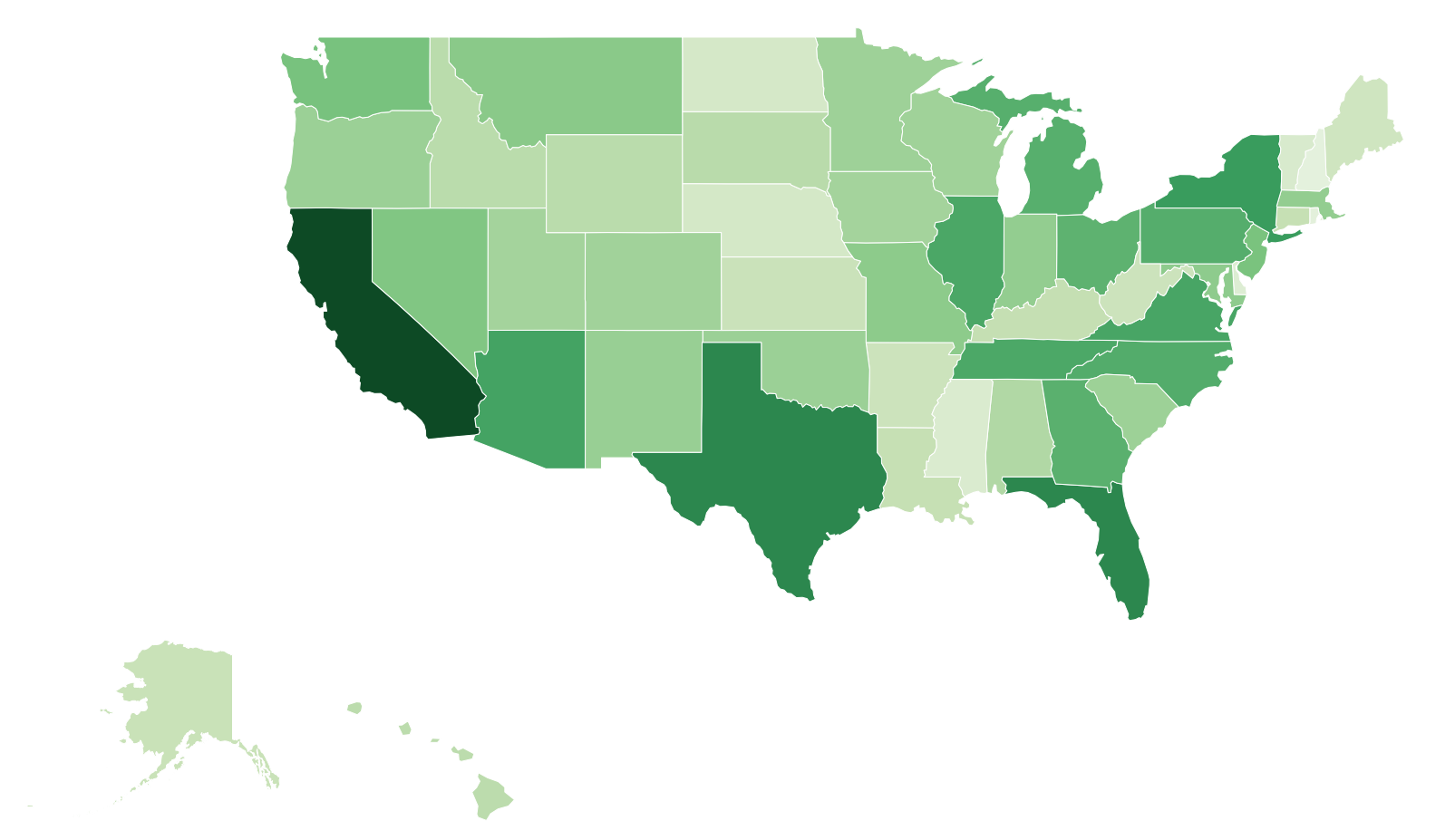
Seniors Affected by State (2025 FBI IC3 Data)
| Rank | State / Territory | Lottery/Sweepstakes Loss |
| 1 | California | $25,968,437 |
| 2 | Florida | $10,252,156 |
| 3 | Texas | $10,236,625 |
| 4 | New York | $7,302,616 |
| 5 | Arizona | $6,353,935 |
| 6 | Virginia | $6,037,557 |
| 7 | Illinois | $5,806,370 |
| 8 | Tennessee | $5,658,269 |
| 9 | North Carolina | $5,055,866 |
| 10 | Pennsylvania | $4,982,957 |
| 11 | Michigan | $4,861,714 |
| 12 | Georgia | $4,604,823 |
| 13 | Ohio | $4,409,447 |
| 14 | Washington | $2,731,871 |
| 15 | New Jersey | $2,710,665 |
| 16 | Nevada | $2,386,369 |
| 17 | Montana | $2,011,772 |
| 18 | Missouri | $1,907,776 |
| 19 | Maryland | $1,855,066 |
| 20 | Massachusetts | $1,736,935 |
| 21 | Indiana | $1,719,118 |
| 22 | New Mexico | $1,536,056 |
| 23 | Oklahoma | $1,444,759 |
| 24 | Oregon | $1,440,614 |
| 25 | South Carolina | $1,373,931 |
| 26 | Minnesota | $1,358,502 |
| 27 | Wisconsin | $1,319,729 |
| 28 | Colorado | $1,261,926 |
| 29 | Iowa | $1,195,598 |
| 30 | Utah | $1,192,360 |
| 31 | Alabama | $843,800 |
| 32 | South Dakota | $696,450 |
| 33 | Idaho | $679,461 |
| 34 | Wyoming | $664,010 |
| 35 | Hawaii | $634,594 |
| 36 | Kentucky | $489,293 |
| 37 | Connecticut | $479,061 |
| 38 | Louisiana | $465,688 |
| 39 | Alaska | $391,849 |
| 40 | Kansas | $369,301 |
| 41 | Arkansas | $329,884 |
| 42 | West Virginia | $327,425 |
| 43 | Maine | $253,619 |
| 44 | Nebraska | $179,229 |
| 45 | North Dakota | $162,550 |
| 46 | Vermont | $112,300 |
| 47 | Mississippi | $100,550 |
| 48 | Delaware | $64,075 |
| 49 | Rhode Island | $27,228 |
| 50 | New Hampshire | $21,081 |
| 51 | District of Columbia | $2,800 |
| 52 | Puerto Rico | $1,500 |
Red Flags of a Lottery or Sweepstakes Scam:
- You are told you won a contest you never entered
- You must pay money to receive your “winnings” — legitimate prizes never require upfront payment
- Payment is requested via wire transfer, gift cards, cryptocurrency, or prepaid cards
- The caller or sender pressures you to act quickly or keep it secret
- The notification comes from a foreign country
- The message contains grammatical errors or uses generic greetings
- You receive a check with instructions to deposit it and send money back
Why Are Seniors Targeted?
- Many seniors grew up in an era when sweepstakes and contests were legitimate and common, making these scams feel familiar and believable
- Older adults may be more isolated and have fewer people to consult before making financial decisions
- Scammers exploit the hope of a financial windfall, particularly among seniors on fixed incomes who worry about outliving their savings
- Repeat victimization is common — scammers share “sucker lists” of seniors who have paid once, targeting them again with new fake prizes
How to Protect Yourself:
- Remember the golden rule: You cannot win a contest you did not enter. Period.
- Never pay money to collect a prize — legitimate lotteries and sweepstakes deduct taxes from winnings, they never ask winners to pay upfront
- Do not wire money, buy gift cards, or send cryptocurrency to claim a prize
- Verify any claim independently — call the organization directly using a number you find yourself, not one provided in the message
- Talk to a trusted family member or friend before responding to any prize notification
- Hang up on unsolicited callers and delete suspicious emails or texts
If You Suspect a Lottery or Sweepstakes Scam:
- Stop all contact with the scammer immediately — do not send any more money
- Report it to the FBI’s Internet Crime Complaint Center (ic3.gov) and the Federal Trade Commission (ReportFraud.ftc.gov)
- Contact your bank or financial institution if you have sent money
- Alert your local police department
- Tell family and friends — there is no shame in being targeted, and speaking up can protect others
Remember: You cannot win a prize you did not enter. Any notification asking you to pay money to collect winnings is a scam, no matter how official it looks.
5-Year National Trend: Lottery, Sweepstakes & Inheritance Scams Against Seniors (2021—2025)
According to five years of FBI IC3 data, lottery, sweepstakes & inheritance scams targeting Americans aged 60 and older have exploded, growing +163% since 2021. Over this period, seniors reported 13,294 incidents with combined losses of $409 million. The peak year was 2025, with $138,009,567 in reported losses.
| Year | Victims (60+) | Total Losses | % of All Elder Fraud | YoY Change |
| 2021 | 2,518 | $52,473,552 | 3.3% | — |
| 2022 | 2,289 | $68,064,302 | 2.3% | +30% |
| 2023 | 1,878 | $62,664,980 | 1.9% | -8% |
| 2024 | 2,772 | $88,123,935 | 1.9% | +41% |
| 2025 | 3,837 | $138,009,567 | 1.9% | +57% |
| 5-Year Total | 13,294 | $409,336,336 | 2.0% | +163% (2021—2025) |
Source: FBI Internet Crime Complaint Center (IC3) Annual Reports, 2021—2025. Totals summed across the 52 FBI IC3 state and territory elder-fraud reports (lottery/sweepstakes/inheritance, victims age 60 and older). “% of All Elder Fraud” shows this crime type’s share of total elder fraud losses that year.
Documented Lottery, Sweepstakes & Inheritance Scam Cases
Three reported cases from federal indictments, sentencings, and news investigations — anonymized, with dates and dollar amounts — illustrating how lottery, sweepstakes & inheritance scam play out against older adults in practice.
Arkansas man sentenced to federal prison for lottery scam targeting elderly victims (Jan. 2026)
A federal judge sentenced an Arkansas man to prison for his role in a lottery-prize scam that targeted elderly Americans. The scheme followed the classic pattern: victims received notifications of having “won” a foreign lottery, then were pressured to pay fees, taxes, and customs charges to release the supposed winnings. Multiple victims sent thousands of dollars before realizing the prize did not exist. This sentencing was one of several federal prosecutions of lottery-scam money mules in late 2025 and early 2026. Source: DeltaPlex News, Jan. 13, 2026.
U.S. Mail theft investigator stole $330,000 from elderly recipients (Aug. 2025)
Federal prosecutors charged a U.S. Postal Service mail-theft investigator with stealing more than $330,000 in checks from packages destined for elderly recipients — including sweepstakes-style legitimate prizes and inheritance distributions. The investigator exploited insider access to identify high-value parcels before delivery. The case underscores that even legitimate sweepstakes payouts can be intercepted; victims who believe they have won something legitimate should verify directly with the named sender by independent phone number before depositing any check. Source: NBC Boston, Aug. 29, 2025.
FBI 2025 Annual Report — lottery/sweepstakes losses against seniors up 57% in one year
The FBI Internet Crime Complaint Center documented $138 million in lottery, sweepstakes, and inheritance scam losses from victims age 60+ in 2025, up from $88 million in 2024 — a +57% year-over-year jump. Over the five-year period 2021-2025, total reported losses in this category reached $409 million across 13,294 victims, with a five-year growth rate of +163%. The peak year (2025) had 3,837 reported victims — substantially more than any prior year, reflecting both rising scam activity and improving reporting awareness. Source: FBI IC3 2025 Annual Report.
Frequently Asked Questions
Direct answers to the most common questions about lottery, sweepstakes, and inheritance scams targeting seniors.
What is a lottery or sweepstakes scam?
A lottery or sweepstakes scam is a fraud in which the victim is told they have won a contest, lottery, or sweepstakes — but must pay fees, taxes, or processing charges to claim the prize. Real lotteries and sweepstakes do not require winners to pay anything. In 2025 the FBI recorded $138 million in losses from victims age 60+, a +57% increase from 2024.
Can I win a lottery I never entered?
No. This is the most important defense rule: you cannot win a lottery, sweepstakes, or contest you did not enter. If you receive a notification of winning — by phone, email, letter, or social media — about a contest you did not personally sign up for, it is a scam. Do not respond. Do not pay any fee.
What is the inheritance scam?
An inheritance scam claims you are entitled to money from a distant relative, foreign official, or wealthy stranger who has died — but you must pay attorney fees, taxes, or transfer charges first. The “Nigerian prince” pattern is the classic example, but modern variants are much more sophisticated, often using AI to generate fake legal documents with real-looking watermarks and notary seals.
What if a foreign lottery agency asks me to pay taxes upfront?
It is a scam. Real lottery winnings have taxes deducted before payout, not paid upfront. Foreign lotteries cannot legally be played by U.S. residents anyway under U.S. law. Any request to send money “first” to receive a larger prize is fraud.
Why are seniors specifically targeted for these scams?
Older adults grew up in a time when sweepstakes marketing (Publishers Clearing House, magazine subscription mailers) was a major consumer category. Scammers exploit this familiarity. Seniors are also more likely to receive paper mail, more likely to answer unsolicited calls, and statistically more responsive to authoritative-looking notifications.
My parent already paid a “fee” for a sweepstakes prize. Now what?
Stop any future payments immediately. Document all communications and receipts. Contact your bank and any payment service used (Western Union, MoneyGram, Walmart wire) as fast as possible — some wires can still be recalled if you act immediately. Report at ic3.gov, reportfraud.ftc.gov, and uspis.gov/report (if the notice came via U.S. mail).
Are AI tools being used in lottery/sweepstakes scams?
Yes. Criminals use AI to mass-produce personalized winner-notification letters and emails with grammar so flawless they bypass the “poorly written” warning sign. AI-generated official-looking certificates and AI-generated audio for “congratulatory phone calls” from fake lottery commissioners are common. Some recovery scams use AI-cloned voices of real FBI agents to convince victims they are getting help.
Where do I report a lottery, sweepstakes, or inheritance scam?
Report to all of: FBI IC3, FTC ReportFraud, U.S. Postal Inspection Service (if you got it by mail), your state Attorney General’s consumer protection division, and the U.S. Department of Justice Elder Fraud Hotline at 1-833-FRAUD-11 (1-833-372-8311).
AI Is Changing How These Scams Work
AI is increasingly used to power lottery and sweepstakes scams. Criminals use AI chatbots to send personalized “winner notification” messages at massive scale, AI-generated voices to make congratulatory phone calls that sound authentic, and AI to create convincing fake lottery websites and official-looking winner certificates. AI has eliminated the grammar mistakes that once helped identify these scams as fraudulent.
In 2025, the FBI received 22,364 complaints citing AI as a tool in fraud, with losses exceeding $893 million. For seniors aged 60+, AI-related fraud accounted for $352 million in reported losses — and these numbers represent only cases where victims recognized AI was involved.
Read our complete guide to AI-Powered Scams Targeting Seniors • AI Phishing & Smishing • AI Phone Scams
2025 FBI Elder Fraud National Data | AI-Powered Scams Hub | Report a Scam / Find Your State Attorney General | Elder Fraud Statistics & Research | Emergency: First 24 Hours Guide
Real cases (anonymized from public news coverage)
Real lottery and sweepstakes scam cases from public news reporting, with names and identifying details removed. These schemes routinely target the same victim repeatedly, demanding ever-larger “fees” to release a prize that never arrives.
October 2025 — British Columbia, Canada. A 90-year-old woman lost $40,000 in a sweepstakes-contest scam after being told she had won a prize that required upfront fees to release. Royal Canadian Mounted Police investigated. Although the case is Canadian, the playbook is identical to the one used against US seniors. As reported by CTV News Vancouver.
January 2026 — Southern District of New York (federal case). A defendant was sentenced in federal court for her role in a nationwide sweepstakes-fraud scheme that targeted elderly victims across the country. The scheme followed the classic pattern: convince the victim they have won, then collect a sequence of fake fees before the ‘prize’ is delivered. As reported by DOJ press release.
February 2026 — Western District of Washington (federal case). A defendant pleaded guilty in federal court to wire fraud for operating a sweepstakes scam that defrauded elderly US victims. Industrialized, overseas-based sweepstakes operations have been a persistent source of large-loss elder fraud cases — the DOJ has prosecuted several in this period alone. As reported by DOJ press release.
Recent news coverage
Selected recent news coverage on lottery and sweepstakes scam scams targeting older adults. Updated from our ongoing monitoring of US news sources.
- Apr 2026 — Elderly man reports losing $9000 through phone scam — Central Nebraska Today (centralnebraskatoday.com)
- Mar 2026 — Missouri Woman Admits Serving as Money Mule for $2 Million Lottery Scam (DOJ press release)
- Mar 2026 — Top senior scams and how to avoid them — AOL.com (AOL)
- Feb 2026 — The Top Scams Retirees Fall For Every Time — AOL.com (AOL)
- Jan 2026 — Florida Senior Stole $600K to Feed Lottery Scratch-off Obsession — Casino.org (Casino.org)
- Dec 2025 — 17 Scams Seniors Are Facing Right Now (AOL)
Related guides on this site
- Real cases where senior scam victims got their money back
- Holiday Shopping Scam Guide
- Home Repair & Contractor Fraud
Sources & verification. Published by HCSK Inc. The information on this page is based on official federal data from the FBI Internet Crime Complaint Center (IC3), the Federal Trade Commission (FTC), the U.S. Department of Justice, and the U.S. Postal Inspection Service. We last checked these figures against the original government sources in June 2026.
The national picture. These scams are part of a much bigger story. In 2025, Americans 60 and older reported losing $7.748 billion to online fraud across 201,266 victims. Read Stolen Trust, our 2026 special study that maps the full elder-fraud landscape, with five years of FBI data and one practical plan to fix it.
Recent Lottery Scam News
Recent lottery-scam news affecting seniors, updated from our alerts desk. Each item links to the original outlet; victims and defendants are kept anonymous.
Pennsylvania couple loses $1,000 after a fake sweepstakes caller demands gift cards
Pennsylvania State Police described a sweepstakes scam in which an older couple was told they had won a prize and needed to buy gift cards before they could collect it. The couple bought two gift cards and sent photos of the card information, losing $1,000. This is a classic red flag: legitimate sweepstakes do not require winners to pay fees, taxes, shipping, or processing charges with gift cards. If a caller asks for card numbers, cryptocurrency, wire transfers, or payment apps before a prize can be released, stop and verify with a trusted person before doing anything else.
Read at Times Leader →Elderly Wisconsin couple lose over $431,000 to a fake sweepstakes scam
An elderly Wisconsin couple lost more than $431,000 over about eight months after callers convinced them they had won Publisher's Clearing House and Mega Millions prizes but needed to pay taxes and fees first. The couple handed over cash, bought gift cards, and had money withdrawn from their checking account before anyone realized it was a scam. A real sweepstakes never asks a winner to pay anything upfront, so the safe move is to slow down and verify any prize claim by contacting the company directly through a number you look up yourself.
Read at Law Enforcement Today →Prize Patrol: What's fueling the renewed sweepstakes trend and how to protect yourself
A report looks at a renewed sweepstakes-scam trend and how older adults can protect themselves.
Read at News4JAX →Don't leave fraud to luck this St. Patrick's Day
Florida elder officials warn that prize and sweepstakes scams rise around holidays; real winnings never require upfront fees.
Read at Alachua Chronicle →'Sweepstakes contest' scam costs 90-year-old woman $40K: B.C. RCMP
Police say a 90-year-old British Columbia woman lost $40,000 to a fake sweepstakes contest scam.
Read at CTV News →