

Senior Scam Prevention & Fraud Resources in Indiana
Indiana seniors reported $82 million in elder fraud losses to the FBI in 2025, with 4,199 victims aged 60 and older. This page provides Indiana-specific scam prevention resources, official reporting contacts, and five years of FBI elder fraud data for the state.
Already been scammed? Read our First 24 Hours Emergency Guide for critical steps to take immediately.
I. Overview: Indiana’s Senior Population & Key Cities
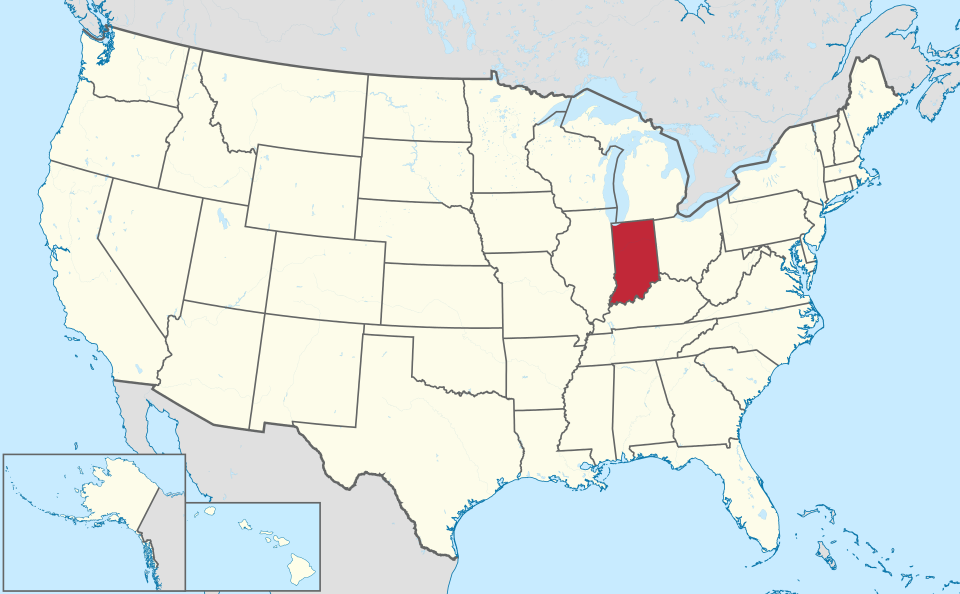
Indiana has an estimated population of 6.9 million as of 2024, with around 1.1 million residents aged 65 and older, making up 16.1% of the total population. As in many Midwestern states, Indiana’s senior population is steadily growing — and so is the risk of financial exploitation and cyber-enabled fraud.
Scammers frequently target older Hoosiers with fake tech support calls, Medicare fraud, romance scams, and phishing emails. The threat is especially concentrated in Indiana’s largest cities:
- Indianapolis (approx. 890,000 people)
- Fort Wayne (approx. 270,000 people)
- Evansville (approx. 120,000 people)
These communities have high numbers of retirees facing an unusual trend: in 2025, the number of Indiana senior fraud victims actually decreased 21%, yet total losses more than doubled to $82 million (+119%). This means fewer victims are losing far more money per incident. Government impersonation surged 382%, tech support fraud rose 140%, and romance scams nearly tripled (+175%).
II. 2025 Victim Report: How Scammers Targeted Indiana’s Seniors
In 2025, Indiana had 4,199 victims aged 60+ who reported losses totaling $81,517,309 — down 21% in victims but up 119% in losses compared to 2024 (5,331 victims / $37M).
Loss by Crime Type
| Crime Type | 2025 Loss | 2024 Loss | Change |
| Investment | $18,105,910 | $10,565,371 | +71% |
| Tech Support | $18,267,082 | $7,611,943 | +140% |
| Romance | $12,531,072 | $4,560,033 | +175% |
| Lottery/Sweepstakes | $1,719,118 | $179,570 | +857% |
| Extortion | $115,824 | $379,649 | -69% |
| Government Impersonation | $10,920,023 | $2,265,961 | +382% |
Elder Fraud Loss Trajectory — Indiana
5-Year Elder Fraud Trend — Indiana (2021—2025)
| Year | Victims (60+) | Total Loss | YoY Change | Nat’l Rank |
| 2021 | 1,319 | $14,875,084 | — | #25 |
| 2022 | 1,172 | $26,497,603 | +78% | #28 |
| 2023 | 1,255 | $37,812,873 | +43% | #25 |
| 2024 | 5,331 | $37,209,947 | -2% | #29 |
| 2025 | 4,199 | $81,517,309 | +119% | #24 |
| 5-Year Total | 13,276 | $197,912,816 | +448% (2021—2025) | — |
Source: FBI Internet Crime Complaint Center (IC3) Annual Reports, 2021—2025. Covers victims aged 60 and older. National rank is by total dollar loss among 52 states/territories. National totals: $1.7B (2021), $3.1B (2022), $3.4B (2023), $4.9B (2024), $7.7B (2025) — $20.8 billion stolen from American seniors over five years.
Top Crime Types Targeting Indiana Seniors (2025 vs. 5-Year)
| Crime Type | 2025 Victims | 2025 Loss | 5-Year Total | Growth (2021—25) |
| Tech Support | 397 | $18,267,082 | $42,398,976 | +401% |
| Investment | 190 | $18,105,910 | $48,139,852 | +2,292% |
| Romance | 243 | $12,531,072 | $32,197,837 | +198% |
| Gov. Impersonation | 224 | $10,920,023 | $14,413,457 | +1,391% |
| BEC | 54 | $6,284,098 | $20,850,671 | +196% |
| Lottery/Sweepstakes | 71 | $1,719,118 | $3,335,550 | +888% |
Top 6 crime types by 2025 losses. Growth calculated from 2021 to 2025. For national crime type trends, see our Crime Type Migration Analysis.
What the data reveals: Indiana presents one of the most unusual patterns in the 2025 data: victim counts fell 21% (from 5,331 to 4,199) while losses more than doubled (+119%, from $37 million to $82 million). This means the average loss per victim roughly tripled, suggesting scammers are targeting fewer people but extracting significantly more money. Government impersonation exploded 382% to $11 million, tech support fraud rose 140% to $18 million, and romance scams nearly tripled (+175%) to $12.5 million. Extortion was one of few categories that decreased (-69%). Statewide, that comes to roughly one senior victim for every 1,649 Indiana residents.
National context: Indiana ranks #24 in total losses but #21 in per-capita victim rate (60.64 per 100,000). The divergence between declining victim counts and skyrocketing losses (+119%) is nearly unique among all 52 states and territories. While other states see both victims and losses rising, Indiana’s data suggests scammers may be shifting to higher-value, more sophisticated schemes. The 119% loss increase is more than double the national average of 57%.
For the full national picture, including how Indiana compares to every other state, visit our national hub page with interactive data and rankings.
III. Emergency & Official Contacts
Local Police Departments – Elder Fraud & Financial Crimes
1. Indianapolis Metropolitan Police Department (IMPD) – Fraud Investigations
- Phone: (317) 327-3811 (non-emergency)
- Website: www.indy.gov
- Tip: Request Economic Crimes or Financial Crimes division.
2. Fort Wayne Police Department – Financial Crimes Unit
- Phone: (260) 427-1222 (non-emergency)
- Website: www.fwpd.org
- Ask for help reporting elder financial exploitation.
3. Evansville Police Department – Investigative Section
- Phone: (812) 436-7896 (non-emergency)
- Website: www.evansvillepolice.com
- Request to speak with fraud investigators for senior-targeted scams.
FBI & Federal Reporting Resources
FBI Indianapolis Field Office
- Phone: (317) 595-4000
- Website: www.fbi.gov/contact-us/field-offices/indianapolis
Internet Crime Complaint Center (IC3)
- Website: www.ic3.gov
- Report elder fraud, romance scams, phishing, or identity theft online.
Indiana Attorney General – Elder Protection Unit
Office of the Indiana Attorney General – Consumer Protection Division
- Consumer Help Line: (800) 382-5516
- Website: www.in.gov/attorneygeneral
- Tip: File complaints about elder scams, identity theft, or financial fraud directly through the site or hotline.
Additional Statewide Elder Assistance & Reporting
Indiana Adult Protective Services (APS)
- Central Hotline: (800) 992-6978
- Website: www.in.gov/fssa/da
- Reports of abuse, neglect, or exploitation can be made 24/7.
Indiana Senior Medicare Patrol (SMP)
- Phone: (800) 986-3505
- Website: www.iaaaa.org/senior-medicare-patrol
- Focuses on Medicare fraud and helping seniors identify suspicious billing or health-related scams.
Indiana Division of Aging – Senior Resource Hub
- Aging & Disability Resource Center (ADRC) Toll-Free Line: (800) 713-9023
- Website: www.in.gov/fssa/da
- Connects seniors and caregivers with protective services, legal help, and scam prevention programs.
Take Action, Prevent Loss
- Save these contacts and share them with older family members or friends.
- If something feels suspicious, report it immediately, it may save someone else too.
- Visit our Learning Center to learn how scammers operate and how to protect yourself online.
- Indiana seniors lose millions each year to fraud, but informed action turns victims into defenders.

Recent Indiana scam news
Recent news coverage of scams affecting Indiana seniors, updated from our alerts desk. Each item links to the original outlet; victims and defendants are kept anonymous.
Check your Medicare statement for this new twist on fraudulent billing
WRTV Investigates reports that scammers and dishonest providers are billing Medicare for Chronic Care Management, a legitimate care-coordination service for people with multiple chronic conditions, that patients never asked for or received. The fraud shows up on your own paperwork, so consumers can catch it by reviewing their Medicare Summary Notice or Explanation of Benefits and asking themselves: did I enroll in this service, did I actually receive it, and do I recognize the provider listed? If you do not understand a charge, you have the right, and the responsibility, to call that provider and ask what it was for. Anyone in Indiana with questions can call the Indiana Senior Medicare Patrol at 1-800-986-3505, and suspected fraud can be reported to the HHS Office of Inspector General at 1-800-HHS-TIPS.
Read at WRTV →Indiana outlet lists Medicare and senior-scam tactics, from fake hospice enrollment to AI voice cloning
The Pendleton Times Post is warning Madison County, Indiana seniors about a range of Medicare and financial scams, including fraudulent hospice enrollment, cold calls pushing an unnecessary Medicare plan switch, unsolicited pressure to sell a home, fake tech-support pop-ups, and calls that use AI-cloned voices to make a family member sound like they are in an emergency. Indiana residents 60 and older lost more than $81 million to fraud in 2025, according to federal data. The advice: never share banking or Medicare details over the phone, verify a relative's emergency by calling them back directly, and slow down before acting on pressure from an unexpected call, text, or pop-up.
Read at Pendleton Times Post →Indiana state cybersecurity blog offers a five-step checklist for 'scam-proofing' the golden years
Indiana's state cybersecurity office published a plain-language checklist to help older residents avoid online fraud: be wary of unsolicited messages asking for personal or financial information, verify anyone's identity through a channel you trust rather than the one they give you, use strong passwords and two-factor authentication, check financial accounts regularly for unauthorized activity, and research an unfamiliar business before buying anything online. The piece notes that Americans 60 and older filed about 201,266 fraud complaints and reported $7.75 billion in losses in 2025, a 37 percent increase in complaints from the year before, with investment scams causing the largest losses. The core message: slow down before responding to an urgent request, since that pressure is exactly what scammers rely on.
Read at IN.gov (Indiana Cybersecurity) →Indiana Secretary of State encourages Hoosiers to protect seniors from financial scams
Indiana's top official urges families to help older adults guard against financial scams and exploitation.
Read at 95.3 WIKI →Free senior and veteran protection event offers scam prevention tactics
A free local event will teach seniors and veterans practical ways to spot and avoid common scams.
Read at Sun-Commercial →Indiana seniors lost $36M to fraud
Indiana residents over 60 lost more than $36 million to fraud in 2025, new research finds.
Read at The Paper of Montgomery County →IV. Learn More: Indiana Scam Prevention Guides
Explore Indiana-specific guides on the most common scams targeting seniors in your state:
- Tech Support Scams in Indiana — Learn to recognize fake pop-ups, phone calls, and remote access schemes.
- Investment Scams in Indiana — Protect your retirement savings from fraudulent advisors and crypto scams.
- Romance Scams in Indiana — Spot the warning signs of fake online relationships designed to steal money.
- Government Impersonation Scams in Indiana — Know what real government agencies will never ask you to do.
- How to Report Scams in Indiana — Step-by-step guide to reporting fraud and starting recovery.
For national-level data on each scam type, see our Investment, Tech Support, Romance, and Government Impersonation national guides.
See how Indiana compares. Curious where Indiana ranks in the national picture? Stolen Trust, our 2026 special study, ranks every state and territory using five years of FBI data and lays out one practical plan to fix elder fraud.