

Senior Scam Prevention & Fraud Resources in Maryland
Maryland seniors reported $176 million in elder fraud losses to the FBI in 2025, with 4,573 victims aged 60 and older. This page provides Maryland-specific scam prevention resources, official reporting contacts, and five years of FBI elder fraud data for the state.
Already been scammed? Read our First 24 Hours Emergency Guide for critical steps to take immediately.
I. Overview: Maryland’s Senior Population & Key Cities
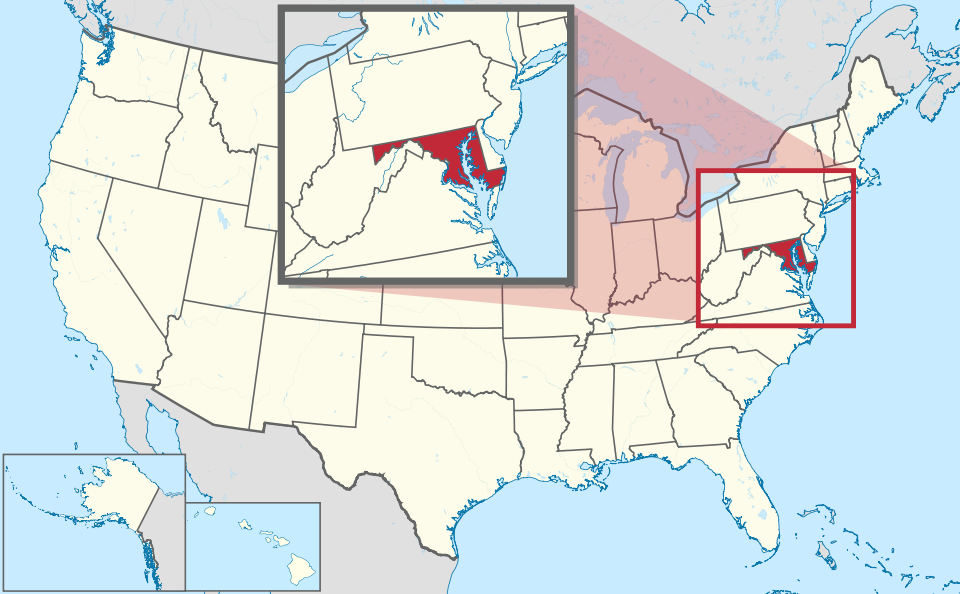
Maryland has an estimated population of 6.2 million as of 2024, with approximately 1.1 million residents aged 65 and older, making up about 17.7% of the state’s population. With its mix of urban, suburban, and rural areas, Maryland’s seniors face a variety of scams ranging from digital fraud and robocalls to government impersonation and health-related scams.
The state’s largest cities, with high concentrations of older adults and consistent reports of elder fraud, include:
- Baltimore (approx. 570,000 people)
- Columbia (approx. 105,000 people)
- Germantown (approx. 91,000 people)
These areas face an accelerating fraud crisis. In 2025, Maryland seniors lost $176 million — more than double the $80 million in 2024 (+120%). Tech support fraud nearly tripled to $37 million (+189%), and investment scams doubled to $84 million (+125%). Government impersonation surged 141%. Maryland’s government agencies have strong programs in place to support prevention and reporting — and they are needed now more than ever.
II. 2025 Victim Report: How Scammers Targeted Maryland’s Seniors
In 2025, Maryland had 4,573 victims aged 60+ who reported losses totaling $176,380,737 — up 42% in victims and 120% in losses compared to 2024 (3,232 victims / $80M).
Loss by Crime Type
| Crime Type | 2025 Loss | 2024 Loss | Change |
| Investment | $84,189,317 | $37,370,364 | +125% |
| Tech Support | $36,714,638 | $12,682,941 | +189% |
| Romance | $8,029,430 | $4,424,939 | +81% |
| Lottery/Sweepstakes | $1,855,066 | $243,692 | +661% |
| Extortion | $152,396 | $447,857 | -66% |
| Government Impersonation | $7,581,628 | $3,148,819 | +141% |
Elder Fraud Loss Trajectory — Maryland
5-Year Elder Fraud Trend — Maryland (2021—2025)
| Year | Victims (60+) | Total Loss | YoY Change | Nat’l Rank |
| 2021 | 1,807 | $30,295,574 | — | #14 |
| 2022 | 1,724 | $63,662,134 | +110% | #13 |
| 2023 | 1,985 | $72,384,277 | +14% | #13 |
| 2024 | 3,232 | $80,163,699 | +11% | #18 |
| 2025 | 4,573 | $176,380,737 | +120% | #12 |
| 5-Year Total | 13,321 | $422,886,421 | +482% (2021—2025) | — |
Source: FBI Internet Crime Complaint Center (IC3) Annual Reports, 2021—2025. Covers victims aged 60 and older. National rank is by total dollar loss among 52 states/territories. National totals: $1.7B (2021), $3.1B (2022), $3.4B (2023), $4.9B (2024), $7.7B (2025) — $20.8 billion stolen from American seniors over five years.
Top Crime Types Targeting Maryland Seniors (2025 vs. 5-Year)
| Crime Type | 2025 Victims | 2025 Loss | 5-Year Total | Growth (2021—25) |
| Investment | 317 | $84,189,317 | $166,126,925 | +1,637% |
| Tech Support | 439 | $36,714,638 | $87,035,800 | +866% |
| BEC | 105 | $12,638,065 | $43,443,871 | +105% |
| Romance | 179 | $8,029,430 | $36,434,554 | -2% |
| Gov. Impersonation | 254 | $7,581,628 | $21,961,005 | +1,630% |
| Personal Data Breach | 232 | $7,162,976 | $16,374,787 | +215% |
Top 6 crime types by 2025 losses. Growth calculated from 2021 to 2025. For national crime type trends, see our Crime Type Migration Analysis.
What the data reveals: Maryland’s elder fraud losses more than doubled in 2025 — from $80 million to $176 million (+120%), with 4,573 seniors victimized (+42%). The standout is tech support fraud, which nearly tripled to $37 million (+189%) — one of the largest tech support increases of any state. Investment scams doubled to $84 million (+125%), and government impersonation surged 141%. Extortion was a rare bright spot, decreasing 66%. Statewide, that comes to roughly one senior victim for every 1,370 Maryland residents.
National context: Maryland ranks #8 in per-capita victim rate (73.01 per 100,000), placing it among the most heavily targeted states per person. The 120% year-over-year loss increase is more than double the national average of 57%, making Maryland one of the fastest-growing states for elder fraud. Its proximity to Washington, D.C. and a relatively affluent senior population may make it an attractive target for high-value scams.
For the full national picture, including how Maryland compares to every other state, visit our national hub page with interactive data and rankings.
III. Emergency & Official Contacts
Local Police Departments – Elder Fraud & Financial Crimes
1. Baltimore Police Department – Financial & Cyber Crimes Unit
- Phone: (410) 396-2525 (non-emergency)
- Website: www.baltimorepolice.org
- Tip: Ask for Economic Crimes or Fraud Unit for elder-targeted scams.
2. Howard County Police Department (Columbia)
- Phone: (410) 313-2200 (non-emergency)
- Website: www.howardcountymd.gov/police
- Request connection to Financial Crimes or Community Outreach.
3. Montgomery County Police Department (Germantown)
- Phone: (301) 279-8000 (non-emergency)
- Website: www.montgomerycountymd.gov/pol
- Ask for financial fraud or elder abuse reporting channels.
FBI & Federal Reporting Tools
FBI Baltimore Field Office
- Phone: (410) 265-8080
- Website: www.fbi.gov/contact-us/field-offices/baltimore
Internet Crime Complaint Center (IC3)
- Website: www.ic3.gov
- File reports of online scams, financial fraud, impersonation, or elder-targeted cybercrime.
Maryland Attorney General – Elder Fraud & Abuse
Maryland Attorney General’s Office – Consumer Protection Division
- Consumer Protection Hotline: (410) 528-8662
- Toll-Free Consumer Hotline: (888) 743-0023
- Website: www.marylandattorneygeneral.gov
- Provides investigation, complaint handling, and education on scams and elder abuse.
Statewide Elder Support & Medicare Fraud Resources
Maryland Adult Protective Services (APS)
- To report elder abuse, exploitation, or neglect:
Contact your local Department of Social Services, or - Statewide Info: dhs.maryland.gov/adult-services
Maryland Senior Medicare Patrol (SMP)
- Phone: (800) 243-3425
- Website: aging.maryland.gov/programs-and-services/medicare-support/senior-medicare-patrol
- Helps seniors identify and report Medicare fraud, billing scams, and healthcare deception.
Maryland Department of Aging – Information & Assistance
- Senior Help Line: (844) 627-5465
- Website: aging.maryland.gov
- Connects older adults to support services, protection programs, and benefits counseling.
Stay Informed. Stay Safe.
- Maryland seniors are losing millions of dollars annually to online and phone scams, but you can help stop it.
- Save and share these official contacts with friends, caregivers, and loved ones.
- Visit our Education Center to learn how to detect scams early and respond with confidence.
- If something feels wrong, speak up. Reporting protects you and others.
Recent Maryland scam news
Recent news coverage of scams affecting Maryland seniors, updated from our alerts desk. Each item links to the original outlet; victims and defendants are kept anonymous.
Elder financial fraud is on the rise in Maryland; state leaders share prevention tactics
Maryland leaders warn that elder financial fraud is rising and share simple steps to help older adults stay safe.
Read at WYPR →Maryland Scam Alert: Police Warn of Spoofed Barrack Phone Number
Maryland State Police warn scammers are faking a police phone number to ask for money or personal details.
Read at The MoCo Show →Maryland seniors targeted by scammers; experts offer tips to protect finances
Maryland experts warn that scammers are increasingly targeting older adults and share steps to safeguard your money.
Read at MSN →New federal bill would let banks hold transactions up to 90 days to stop wire fraud against seniors
A member of Congress has introduced the Protecting Elders from Wire Fraud Act, which would let banks place a hold of up to 90 days on a transaction leaving a senior's account when financial exploitation is suspected, giving time to determine whether the transaction is legitimate. The bill would also require financial institutions to notify a trusted contact associated with the account when a hold is placed, and it would give banks safe harbor from liability when they act in good faith to prevent a suspected scam. Supporters point to FTC data showing $334 million lost to wire fraud in 2025. The bill is still in the early stages of the legislative process, with no funding details, effective date, or committee action yet reported. The takeaway for families: ask your own bank whether it already offers a trusted-contact option or a hold policy for suspicious transactions, since these tools are becoming more common even before any new federal law passes.
Read at Antelope Valley Press →IRS warns of rising senior scams ahead of National Grandparents Day
Ahead of National Grandparents Day, the IRS and federal investigators are warning that scams targeting older adults keep evolving. In "grandparent scams," callers pose as a grandchild claiming to be hospitalized, in an accident, or under arrest, demanding money right away and pressuring the victim not to contact police or other family members to check the story. In a newer twist on romance scams, criminals target widows and widowers on dating sites, build a relationship over time, then claim an overseas emergency, sometimes using AI to alter their voice or appearance on video calls; victims never meet them in person and only ever send money. Common warning signs across both: contact you did not initiate, requests for personal or financial information, and pressure to act immediately. If you get a call or message like this, slow down, hang up, call the family member directly using a number you already have, and never send money or personal information based on an unverified emergency claim. Report suspected fraud to the National Elder Fraud Hotline, the FBI's IC3.gov, or the DOJ's Elder Justice Initiative.
Read at KATV →Seven Medicare fraud red flags to watch for after CMS blocked $1.6 billion in improper payments
The Centers for Medicare & Medicaid Services says enforcement actions have stopped more than $1.6 billion in potentially improper Medicare laboratory payments, part of a broader crackdown on Medicare billing fraud. Consumer red flags to watch for include: someone asking for your Medicare number in exchange for a "free" test or product, a lab test or medical equipment showing up that you never ordered, a caller claiming Medicare "wants" you to get something, anyone offering cash, gift cards, or other perks for your Medicare information, a statement listing a diagnosis or service that doesn't make sense, or pressure to ask your doctor for something you don't need. The advice: compare your Medicare claims against your own appointment calendar and receipts, review your Medicare Summary Notice regularly, check your claims through your secure Medicare account online, and report anything suspicious to 1-800-MEDICARE or your state's Senior Medicare Patrol.
Read at Saving Advice →IV. Learn More: Maryland Scam Prevention Guides
Explore Maryland-specific guides on the most common scams targeting seniors in your state:
- Tech Support Scams in Maryland — Learn to recognize fake pop-ups, phone calls, and remote access schemes.
- Investment Scams in Maryland — Protect your retirement savings from fraudulent advisors and crypto scams.
- Romance Scams in Maryland — Spot the warning signs of fake online relationships designed to steal money.
- Government Impersonation Scams in Maryland — Know what real government agencies will never ask you to do.
- How to Report Scams in Maryland — Step-by-step guide to reporting fraud and starting recovery.
For national-level data on each scam type, see our Investment, Tech Support, Romance, and Government Impersonation national guides.
See how Maryland compares. Curious where Maryland ranks in the national picture? Stolen Trust, our 2026 special study, ranks every state and territory using five years of FBI data and lays out one practical plan to fix elder fraud.