

Protecting Seniors From Lottery, Sweepstakes, and Inheritance Scams: How to Spot, Prevent, and Report Fraud
- What Is a Lottery, Sweepstakes, or Inheritance Scam?
- How Do These Scams Work?
- Common Types of Lottery and Sweepstakes Scams
- US Heat Map — Lottery/Sweepstakes Scams Targeting Seniors (2025)
- Seniors Affected by State (2025 FBI Data)
- Red Flags of a Lottery or Sweepstakes Scam
- Why Are Seniors Targeted?
- How To Protect Yourself
- If You Suspect a Lottery or Sweepstakes Scam
Already been scammed? Read our First 24 Hours Emergency Guide for critical steps to take immediately.
What Is a Lottery, Sweepstakes, or Inheritance Scam?
A lottery, sweepstakes, or inheritance scam is a fraud in which criminals contact seniors claiming they have won a large prize, a lottery jackpot, or received an unexpected inheritance — but must pay fees, taxes, or processing costs upfront before they can collect. The prize does not exist. Every dollar sent is stolen.
According to the 2025 FBI IC3 Elder Fraud Report, American seniors lost over $136 million to lottery, sweepstakes, and inheritance scams — with an average loss of approximately $49,000 per victim. This makes it one of the most financially devastating scam categories specifically targeting older adults.
How Do These Scams Work?
Scammers contact seniors through phone calls, emails, text messages, social media, or physical mail. Their messages often look official, using fake letterheads, legal language, and even references to real organizations. The typical pattern follows these steps:
- The notification: You receive a message claiming you’ve won a major prize, been selected in an international lottery, or are the beneficiary of an inheritance from a distant or unknown relative.
- The hook: The amount is always large — often hundreds of thousands or millions of dollars — to create excitement and override caution.
- The fee: Before you can collect, you’re told you must pay taxes, customs fees, insurance, legal costs, or processing charges. These fees are requested via wire transfer, gift cards, cryptocurrency, or prepaid debit cards — all methods that are nearly impossible to trace or recover.
- The cycle: After the first payment, additional fees are invented. Victims are told they are “almost there” and just need to pay one more fee. This cycle can repeat for weeks or months, draining savings.
- The secrecy: Victims are urged not to tell family or friends, often under the pretense that publicity could jeopardize the prize.
Common Types of Lottery and Sweepstakes Scams Affecting Seniors:
- Foreign lottery scams: Notifications from supposed lotteries in Jamaica, Canada, the Netherlands, or the UK. Note: it is illegal for U.S. residents to participate in foreign lotteries.
- Sweepstakes impersonation: Fake messages claiming to be from Publishers Clearing House, Mega Millions, or similar well-known organizations.
- Inheritance fraud: Letters or emails from supposed attorneys or banks claiming a distant relative has died and left a large estate, requiring fees to release the funds.
- Social media prize scams: Fake giveaway posts or direct messages on Facebook, Instagram, or WhatsApp claiming you’ve been randomly selected to win.
- Check overpayment scams: A fake check arrives as “partial winnings” with instructions to deposit it and wire back a portion for “taxes.” The check bounces days later, and the wired money is gone.
US Heat Map — Lottery/Sweepstakes Scam Losses by State (2025)
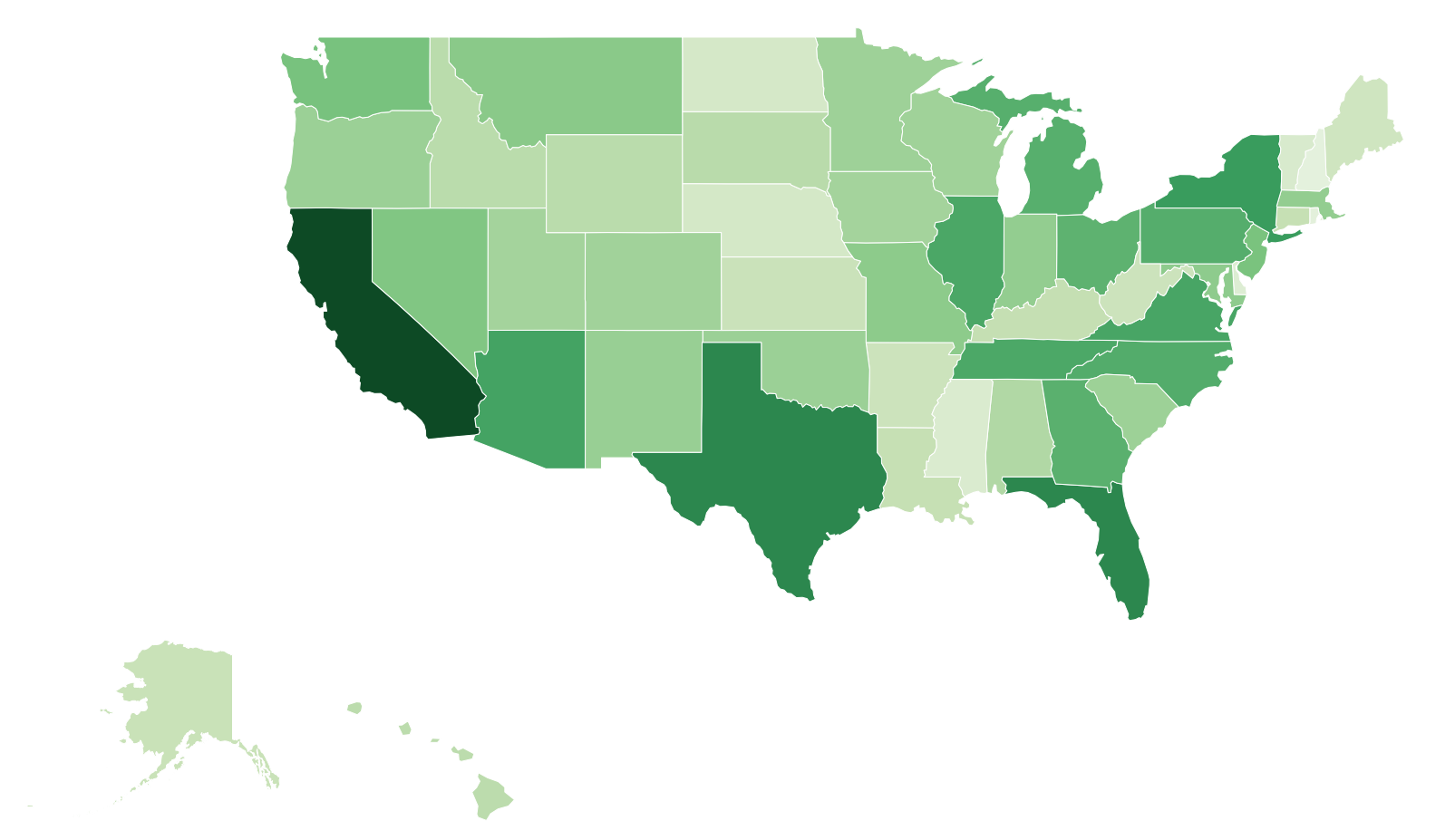
Seniors Affected by State (2025 FBI IC3 Data)
| Rank | State / Territory | Lottery/Sweepstakes Loss |
| 1 | California | $25,968,437 |
| 2 | Florida | $10,252,156 |
| 3 | Texas | $10,236,625 |
| 4 | New York | $7,302,616 |
| 5 | Arizona | $6,353,935 |
| 6 | Virginia | $6,037,557 |
| 7 | Illinois | $5,806,370 |
| 8 | Tennessee | $5,658,269 |
| 9 | North Carolina | $5,055,866 |
| 10 | Pennsylvania | $4,982,957 |
| 11 | Michigan | $4,861,714 |
| 12 | Georgia | $4,604,823 |
| 13 | Ohio | $4,409,447 |
| 14 | Washington | $2,731,871 |
| 15 | New Jersey | $2,710,665 |
| 16 | Nevada | $2,386,369 |
| 17 | Montana | $2,011,772 |
| 18 | Missouri | $1,907,776 |
| 19 | Maryland | $1,855,066 |
| 20 | Massachusetts | $1,736,935 |
| 21 | Indiana | $1,719,118 |
| 22 | New Mexico | $1,536,056 |
| 23 | Oklahoma | $1,444,759 |
| 24 | Oregon | $1,440,614 |
| 25 | South Carolina | $1,373,931 |
| 26 | Minnesota | $1,358,502 |
| 27 | Wisconsin | $1,319,729 |
| 28 | Colorado | $1,261,926 |
| 29 | Iowa | $1,195,598 |
| 30 | Utah | $1,192,360 |
| 31 | Alabama | $843,800 |
| 32 | South Dakota | $696,450 |
| 33 | Idaho | $679,461 |
| 34 | Wyoming | $664,010 |
| 35 | Hawaii | $634,594 |
| 36 | Kentucky | $489,293 |
| 37 | Connecticut | $479,061 |
| 38 | Louisiana | $465,688 |
| 39 | Alaska | $391,849 |
| 40 | Kansas | $369,301 |
| 41 | Arkansas | $329,884 |
| 42 | West Virginia | $327,425 |
| 43 | Maine | $253,619 |
| 44 | Nebraska | $179,229 |
| 45 | North Dakota | $162,550 |
| 46 | Vermont | $112,300 |
| 47 | Mississippi | $100,550 |
| 48 | Delaware | $64,075 |
| 49 | Rhode Island | $27,228 |
| 50 | New Hampshire | $21,081 |
| 51 | District of Columbia | $2,800 |
| 52 | Puerto Rico | $1,500 |
Red Flags of a Lottery or Sweepstakes Scam:
- You are told you won a contest you never entered
- You must pay money to receive your “winnings” — legitimate prizes never require upfront payment
- Payment is requested via wire transfer, gift cards, cryptocurrency, or prepaid cards
- The caller or sender pressures you to act quickly or keep it secret
- The notification comes from a foreign country
- The message contains grammatical errors or uses generic greetings
- You receive a check with instructions to deposit it and send money back
Why Are Seniors Targeted?
- Many seniors grew up in an era when sweepstakes and contests were legitimate and common, making these scams feel familiar and believable
- Older adults may be more isolated and have fewer people to consult before making financial decisions
- Scammers exploit the hope of a financial windfall, particularly among seniors on fixed incomes who worry about outliving their savings
- Repeat victimization is common — scammers share “sucker lists” of seniors who have paid once, targeting them again with new fake prizes
How to Protect Yourself:
- Remember the golden rule: You cannot win a contest you did not enter. Period.
- Never pay money to collect a prize — legitimate lotteries and sweepstakes deduct taxes from winnings, they never ask winners to pay upfront
- Do not wire money, buy gift cards, or send cryptocurrency to claim a prize
- Verify any claim independently — call the organization directly using a number you find yourself, not one provided in the message
- Talk to a trusted family member or friend before responding to any prize notification
- Hang up on unsolicited callers and delete suspicious emails or texts
If You Suspect a Lottery or Sweepstakes Scam:
- Stop all contact with the scammer immediately — do not send any more money
- Report it to the FBI’s Internet Crime Complaint Center (ic3.gov) and the Federal Trade Commission (ReportFraud.ftc.gov)
- Contact your bank or financial institution if you have sent money
- Alert your local police department
- Tell family and friends — there is no shame in being targeted, and speaking up can protect others
Remember: You cannot win a prize you did not enter. Any notification asking you to pay money to collect winnings is a scam, no matter how official it looks.
5-Year National Trend: Lottery, Sweepstakes & Inheritance Scams Against Seniors (2021—2025)
According to five years of FBI IC3 data, lottery, sweepstakes & inheritance scams targeting Americans aged 60 and older have exploded, growing +163% since 2021. Over this period, seniors reported 13,294 incidents with combined losses of $409 million. The peak year was 2025, with $138,009,567 in reported losses.
| Year | Victims (60+) | Total Losses | % of All Elder Fraud | YoY Change |
| 2021 | 2,518 | $52,473,552 | 3.3% | — |
| 2022 | 2,289 | $68,064,302 | 2.3% | +30% |
| 2023 | 1,878 | $62,664,980 | 1.9% | -8% |
| 2024 | 2,772 | $88,123,935 | 1.9% | +41% |
| 2025 | 3,837 | $138,009,567 | 1.9% | +57% |
| 5-Year Total | 13,294 | $409,336,336 | 2.0% | +163% (2021—2025) |
Source: FBI Internet Crime Complaint Center (IC3) Annual Reports, 2021—2025. National totals computed from all 52 state/territory reports. “% of All Elder Fraud” shows this crime type’s share of total elder fraud losses that year.
AI Is Changing How These Scams Work
AI is increasingly used to power lottery and sweepstakes scams. Criminals use AI chatbots to send personalized “winner notification” messages at massive scale, AI-generated voices to make congratulatory phone calls that sound authentic, and AI to create convincing fake lottery websites and official-looking winner certificates. AI has eliminated the grammar mistakes that once helped identify these scams as fraudulent.
In 2025, the FBI received 22,364 complaints citing AI as a tool in fraud, with losses exceeding $893 million. For seniors aged 60+, AI-related fraud accounted for $352 million in reported losses — and these numbers represent only cases where victims recognized AI was involved.
Read our complete guide to AI-Powered Scams Targeting Seniors • AI Phishing & Smishing • AI Phone Scams
2025 FBI Elder Fraud National Data | AI-Powered Scams Hub | Report a Scam / Find Your State Attorney General | Elder Fraud Statistics & Research | Emergency: First 24 Hours Guide